













Amoebas Act as Trojan Horses for Salmonella

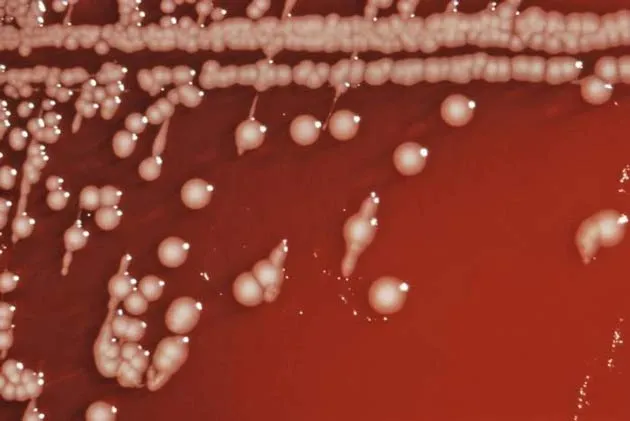
Salmonella are microscopic living bacteria that can contaminate almost any food type, causing diarrhea, abdominal pain and fever. Scientists know the bacteria have evolved unique mechanisms to prevent the body's immune system from functioning effectively, but until now it was not understood how it survives so successfully in the environment.
Scientists said today they've learned that Salmonella get inside amoebas — single-celled organisms common on land and in water — and protect themselves with a secretion system.
The research suggests that amoebas may be a major source of Salmonella within the environment and could play a significant role in transmission of infection to man and animals.
Salmonella uses a system, called SP12 type III, which acts as a bacterial machine inside organisms and causes disease in humans, animals and plants. The system employs a syringe-like mechanism to inject bacteria into cells that would normally release compounds to rid the body of harmful substances. This system changes the structure of the cell and prevents these compounds from coming into contact with pathogens and destroying them.
The work was done at the University of Liverpool, in collaboration with the Institute for Animal Health.
"Salmonella has managed to survive extremely successfully in the environment, finding its way into our food and causing illness, despite the body's best efforts to fight it off," explained Paul Wigley, from the National Centre for Zoonosis Research and the University of Liverpool. "We found that it uses a system which operates in the human immune system as well as inside amoeba living in the environment."
This system essentially protects Salmonella within cellular compartments, called phagosomes, where it can survive and multiply.
Get the world’s most fascinating discoveries delivered straight to your inbox.
"Its ability to survive in amoeba is a huge advantage to its continued development as it may be more resistant to disinfectants and water treatment," Wigley said. "This means that we need to work to understand ways of controlling amoeba in water supplied to animals and prevent it acting as a 'Trojan Horse' for Salmonella and other pathogens."
The research, done in the UK and supported by the Society for Applied Microbiology, the Department for Environment, Food and Rural Affairs (DEFRA), and the Higher Education Funding Council for England (HEFCE), is published in the journal Applied and Environmental Microbiology.
