













Can Water Explode in a Microwave?
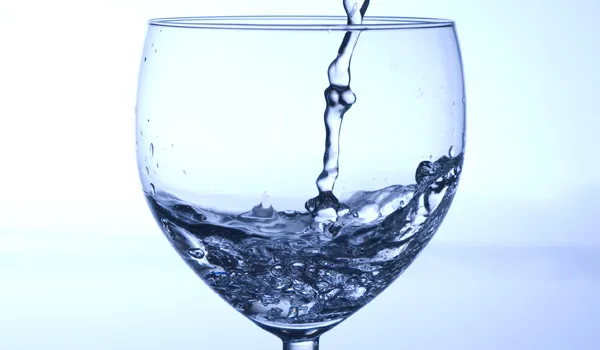
Whether you’re a glass-half-full person or the glass-half empty kind, chances are you’re not a glass-full-of-scalding-water-exploding-in-my-face type. But that’s just what you might become if you overheat a glass of water in a microwave.
Yes, for once, an urban legend rings true: If you heat a glass of water above its boiling point in a microwave and it does not boil, then you’ve created a potential ticking time bomb. When you move the glass or drop something into it, the water can boil vigorously and, in some cases, shoot out of the glass in a dangerous jet.
Boiling is a process in which a substance moves from liquid to gaseous state, creating bubbles along the way. That transition relies on pressure as much as temperature; basically, the molecular motion of the water vapor, and the pressure it exerts, must overcome the air pressure above the water’s surface. The lower the air pressure, the lower the vapor pressure – and the water temperature – can be, which explains why water boils more quickly at higher altitudes. [How Microwave Ovens Work]
But bubble formation also depends on heat distribution in the water and whether the water’s container readily allows bubble formation. This is where microwaves, and microwave-safe cups, differ from stovetops, pots and pans.
Let’s look at the second factor first. Like natural processes or fledgling businesses, phase transitions can benefit from a kick-start: Raindrops form more rapidly amid airborne dust particles, and crystals grow more readily with a few grains to spur formation. Similarly, small imperfections in a vessel’s walls can contain pockets of gas that act as starter bubbles. Scientists call these spots nucleation sites. The smoother your microwave-safe glass, the fewer nucleation sites you have, and the more likely your water will superheat instead of boil.
On the stove, heat enters water from the sides and bottom of a pot, where nucleation happens most readily. Conversely, microwaves heat water by vibrating molecules directly, all at once. When all of the water heats simultaneously, little opportunity remains for bubble formation. [Can Ball Lightning Be Created in Microwave Ovens?]
Once water superheats, a good jostle will upset the equilibrium, collapsing the liquid into catastrophic boiling, as will an introduction of an object, such as a fork, which offers numerous nucleation sites.
Get the world’s most fascinating discoveries delivered straight to your inbox.
One precaution can help you avoid this teatime of terror, however. Water mixtures and solutions are less likely to superheat than pure water, so lessening the odds of calamity could boil down to simply adding tea or sugar before nuking.