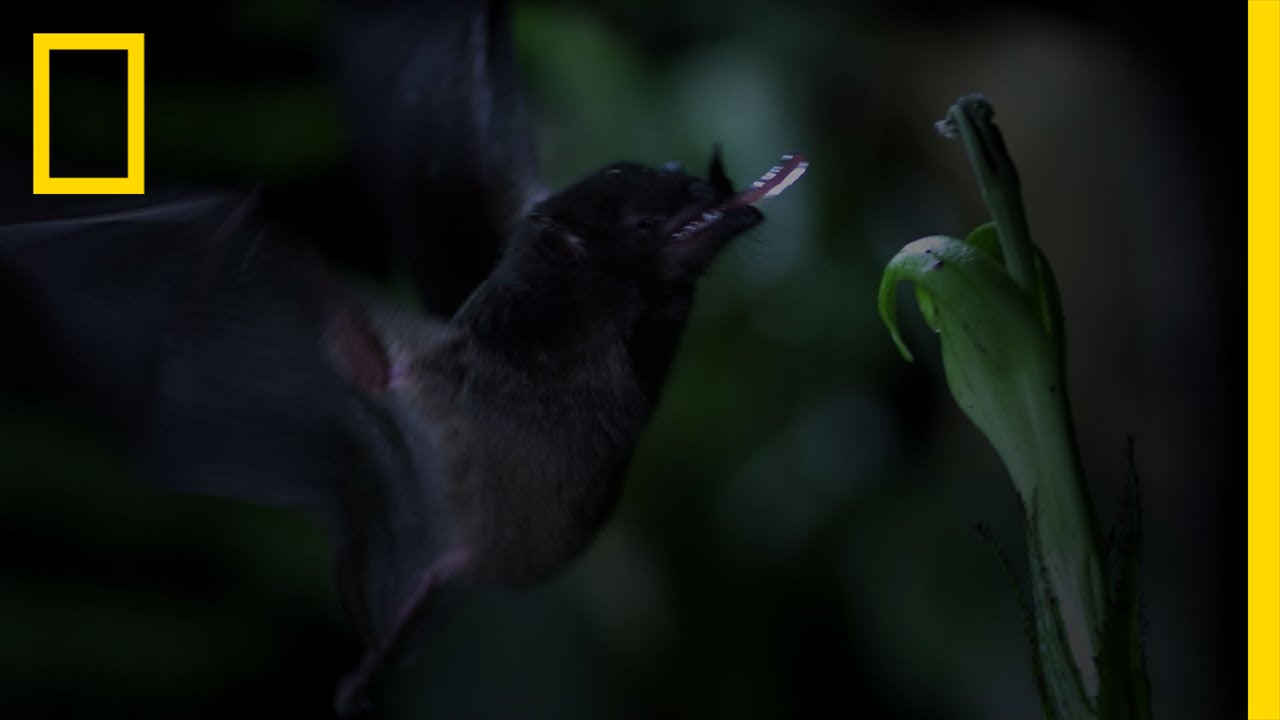
A team of explorers for the National Geographic Channel has captured never-before-seen footage of the tube-lipped nectar bat, a peculiar species discovered in 2005 in the cloud forests of Ecuador. The bat is camera-worthy thanks to one attribute in particular: its incredibly long, wormlike tongue.
The 2.5-inch bat sports a 3.5-inch tongue — the longest (relative to body length) of any mammal in the world. If humans were similarly proportioned, we'd have 9 feet of flesh spilling out of our mouths.
To capture this striking footage of the bat plunging its tongue into nectar-laden flowers, the NatGeo team cut a tiny hole into the base of a flower and installed a special slow-motion camera inside, which slowed the action by 40 times.
Latest Videos FromLive Science
On top of upping the tongue length record in class Mammalia, the discovery of the tube-lipped nectar bat in 2005 also solved a longstanding mystery: The question of what pollinated the plant Centropogon nigricans, which stashes its pollen deep within its flutelike bloom. Turns out, the flower depends solely on this bat and its outsized tongue.
The footage will air as part of the Untamed Americas TV documentary series, which premiers on the National Geographic Channel Sunday, June 10 and Monday, June 11, at 9 p.m. ET/PT in the U.S., and globally starting in June.
Follow Life's Little Mysteries on Twitter @llmysteries. We're also on Facebook & Google+.