














Do Animals Get Seasick?
When Earnest Shackleton trekked to the Antarctic, he brought ponies (and whiskey) with him to help. According to his journals, those ponies didn’t fare so well on the water. They, like many people, responded to the pitching seas with confusion and dizziness. But because horses cannot vomit — the sphincter that goes from their esophagus to their stomachs is too tight — they experience colic instead. But even though they didn’t lose their lunches, the ponies were definitely seasick.
Turns out, most animals get seasick, just as people do. In fact, it's such a common problem that the FDA approved a drug, called Cerenia, for dogs and cats to keep their stomachs settled. “Before Cerenia was available, we recommended Dramamine — a human over-the-counter medication,” says Eric Maddon, a veterinarian in Brooklyn. “It never worked very well, but that’s all we had.”
In fact, there’s a long history of using animals to model human seasickness. The earliest study of motion sickness was done in the early 1900’s on dogs — scientists spun the animals around on a platform until they vomited. Since then, scientists have discovered that cats, monkeys, birds, sheep and horses all experience motion sickness. There are also some animals that seem to be immune to motion sickness, like macaques. Today, the best primate model for motion sickness in humans is the squirrel monkey. [The 6 Craziest Animal Experiments]
But what about animals that live in the water? Do they ever lose their lunches in rough seas? It’s not entirely clear, but one study did try to determine whether fish could get motion sick. The researchers put the fish in a tank, and onto an airplane, and observed them after the plane went into a deep dive. Afterwards, the fish appeared disoriented, and swam about in circles.
Interestingly, no one really knows why animals get seasick. There are all kinds of theories for why we might have evolved such a strong response for feeling disoriented. One theory is that it is protecting the body against neurotoxins. For a long time — before boats or cars — the only time our senses would be conflicting the way they do during motion sickness happened when we were poisoned. Vomiting is a means of getting rid of that poison. Other theories posit that motion sickness teaches us to avoid situations in which we’re out of control, and that might be dangerous. But no one really knows.
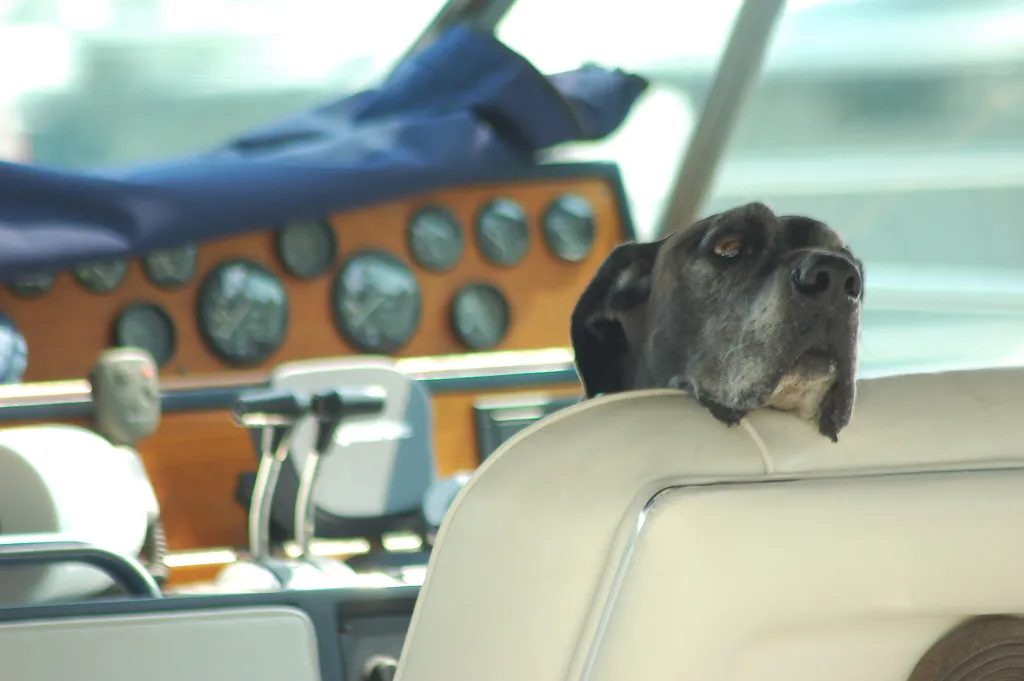
We do know, however, that it’s not just humans who hurl, says Maddon. “We see it in cats and dogs quite frequently.” So if you’re taking your pet to sea, it might be worth a trip to ask for some doggy Dramamine.
Follow Life's Little Mysteries on Twitter @llmysteries, then join us on Facebook.
Feed your curiosity with an exclusive mystery every week, solved with science and delivered direct to your inbox before it's seen anywhere else.