














Why Does Hair Change as You Age?
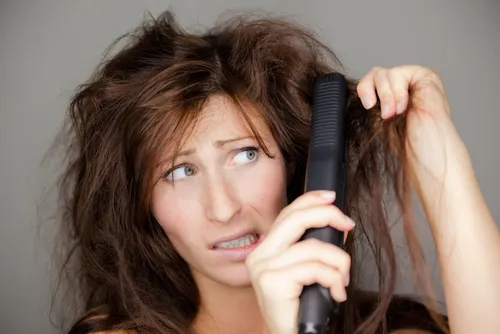
It's a situation replayed constantly in hair salons across the country. A client comes in whose long-time hairdresser notices that something is a little bit different. The client's hair texture has changed, becoming more curly (or straight) since the first time they walked in the door years ago.
But why the shift? Many stylists, and even some doctors, say the change is driven by changing hormones throughout a person's life, especially during events like pregnancy and menopause.
Unfortunately this hypothesis hasn't gone through rigorous scientific testing. Lynne Goldberg, Director of the Hair Clinic at Boston University School of Medicine, said that while she has seen hair texture change over time in patients, she is unaware of any studies that look into the reasons for a gradual change in hair texture in otherwise healthy patients. [Does Stress Really Make the President's Hair Go Gray?]
Sudden changes in hair texture, however, can indicate more serious problems, some of which are related to hormone shifts. "I think it is well known that thyroid disease can change hair texture," Goldberg said. Abrupt changes in hair texture, especially growing finer or more brittle, could indicate underlying conditions like hypothyroidism, especially when accompanied with other symptoms. Other documented causes of hair change are associated with HIV infection and chronic malnutrition, during which hair can grow in straighter and weaker.
There have been other interesting cases of hair texture change, including one that was documented in the Archives of Dermatology this past November. In that case, a teenager lost some of his hair (a condition known as aleopecia areata), and his doctors prescribed a steroid-laced cream to help the hair grow back in the areas where it had fallen out. The boy's hair did grow back, but instead of growing back in his natural tight curls, it came back straight, resembling the hair he had in childhood. The researchers, from the University of Miami, said they haven't yet figured out whether or not it was the cream, a change in how the follicles regrew, or "an unknown cause that remains to be answered."
Follow Life's Little Mysteries on Twitter @llmysteries, then join us on Facebook.
Get the world’s most fascinating discoveries delivered straight to your inbox.