














Why Do Roosters Have Wattles?
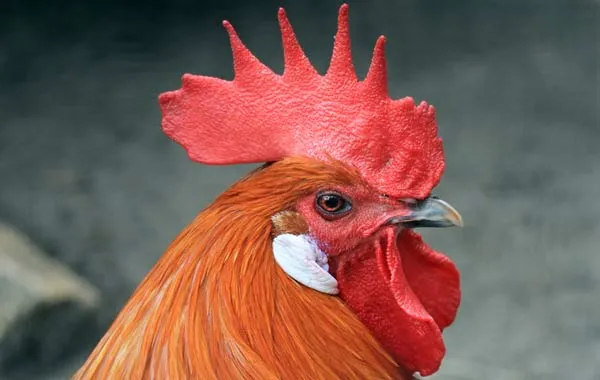
The bigger a rooster's wattle, the more it will attract the attention of females. But it's not the fleshy flaps of skin that hang from the rooster's neck that the hens really care about. Instead, the wattles help females recognize that a rooster is advertising food he's willing to share.
"Everyone believed that roosters had wattles because females liked them," said Carolynn Smith, a behavioral biologist at Macquarie University in Sydney, Australia.
Females were supposed to prefer bigger, redder ones because they show that the male is in good health. This is true for the roosters' combthe ornament on top of his head but no one ever found female preference for any characteristic of the wattle."
Along with her colleague Chris Evans, Smith decided to take another look at what wattles do. One day, Smith watched a male that had just found a piece of food.
"Instead of eating it, he repeatedly picked it up and dropped it and continually bobbed his head up-and-down and swung it side-to-side until the female came and took the food," Smith said.
Scientists are familiar with this fussy food behavior, even Darwin described it.
But Smith and Evans also noticed that the wattles swung about wildly, sometimes smacking the male on the side of his head.
Get the world’s most fascinating discoveries delivered straight to your inbox.
"Perhaps males have wattles because it makes this food display more conspicuous," Smith said.
To test the theory, the researchers created a virtual environment in which they showed the females a 3D, animated avatar of a rooster with different wattles. The wattles help the females to quickly recognize that the male is offering food.
"Our research suggests that bigger is better because it makes the male more conspicuous when he's displaying with food," said Smith, who published her results in a 2009 issue of the journal Animal Behavior. "The wattles increase the area around the head and make a bigger target that is easier for the hen to spot."
So, why do females have wattles also? The jury is still out, Smith said. "Interestingly, males actually prefer females that have redder combs because it is an indicator of good health."