













Where Are the Oldest Rocks on Earth Found?

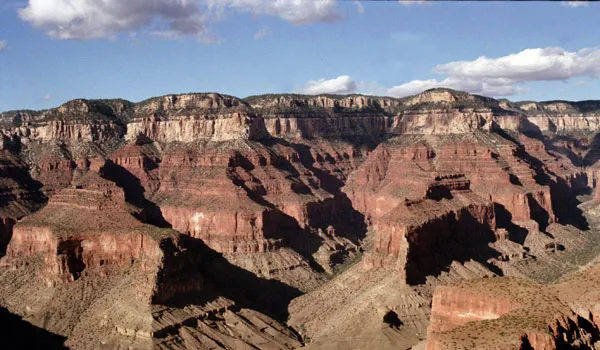
You don't need to go to a museum to find really, really old things. Ordinary rocks, for example, may be millions or billions of years old, and are free for the taking. But rocks you're likely find along a nature trail or highway are mere infants compared to the oldest rocks on Earth.
Geologists categorize rocks into three basic types, depending on their origin. Igneous rocks are formed by the cooling and solidification of magma (molten rock in Earth's crust ) on or near the surface. Sedimentary rocks, such as sandstone, are created by the compression of sediment or particles. Metamorphic rocks are formed when existing igneous or sedimentary rocks are fused together by high heat and pressure.
Finding the oldest rocks in the world is a harder task than it might seem. Earth's crust is a dynamic system and is always in motion, so rocks are continually being moved around, created and melted down in the great geological recycling program. The oldest rocks on Earth can be very difficult to find and verify, but the youngest rocks are easy to locate: look for the nearest active volcano.
The oldest whole rocks found so far date back about 4.28 billion years. They were found in 2001 by geologists excavating near Canada's Hudson Bay in northern Quebec, andthe research appeared in the Sept. 25, 2008, issue of the journal Science.
The oldest geological material ever found, which are not technically rocks, are mineral grains called zircons found in Western Australia, which date back about 4.36 billion years.
Technically, the oldest known rocks existing on Earth are not from Earth at all, but are instead of extraterrestrial origin . Moon rock samples collected during the Apollo missions have been dated to about 4.5 billion years, besting our oldest terrestrial rocks by a few hundred million years.
- Which Mountain Is the Tallest in the World?
- How Did the Tibetan Plateau Form?
- A Geologist's Paradise and Nightmare
Got a question? Email it to Life's Little Mysteries and we'll try to answer it. Due to the volume of questions, we unfortunately can't reply individually, but we will publish answers to the most intriguing questions, so check back soon.
Get the world’s most fascinating discoveries delivered straight to your inbox.
