













Evolution of New Brain Area Allowed Small Motor Skills

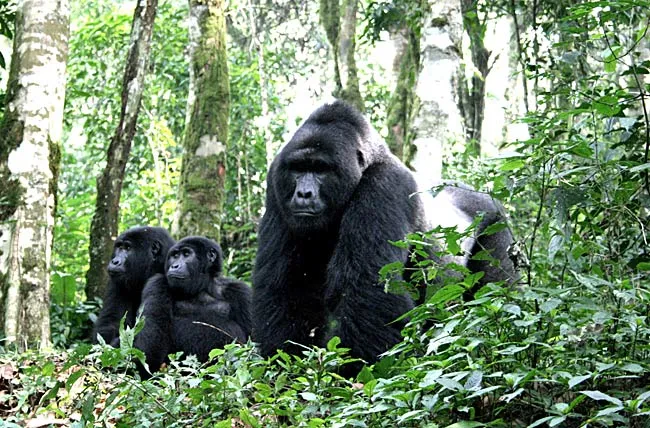
A relatively new area of the brain's cerebral cortex evolved to enable humans and other primates the necessary small motor skills to pick up small objects and deftly use tools, scientists now say.
In most animals, including cats, rats and some monkeys, the brain's primary motor cortex controls all movements indirectly through the circuitry of the spinal cord, said researcher Peter Strick, professor of neurobiology at the University of Pittsburgh School of Medicine and Pittsburgh's Veterans Affairs Medical Center.
But in humans, some monkeys and the great apes that use tools, another area of the motor cortex developed and is now home to a special set of cortico-motoneuronal (CM) cells, Strick explained. These cells directly control spinal cord motor neurons, which are the nerve cells responsible for causing contraction of shoulder, elbow and finger muscles.
The direct control exerted by CM cells bypasses the limitations imposed by spinal cord circuitry and permits the development of highly complex patterns of movement, such as the finger action needed to type.
"What we've shown is that along with evolution of direct control over motor neurons, a new cortical area has evolved that's right next to the old one," Strick said. "We still have much the same spinal machinery the frog has, but the new cortical area with CM cells endows humans with the superior hand skills to manufacture and use tools.
Chimpanzees are humans' closest relatives. On the evolutionary tree of life, chimps and humans split about 4 million years ago, some researchers think. In a 2007 study, researchers concluded that chimps could make crude tools on their own, suggesting humans likely inherited some of their sophisticated tool skills an ancestor held in common with chimps.
Strick and colleague Jean-Alban Rathelot based their conclusions on a series of experiments in which rabies virus was injected into single muscles in the shoulders, elbows or fingers of monkeys. The virus, chosen because of its unique ability to travel between networked nerve cells, was tracked to locate CM cells in the primary motor cortex.
Get the world’s most fascinating discoveries delivered straight to your inbox.
The discovery allowed another interesting explanation:
The direct connection from the cortex to motor neurons is not present at birth, but develops during the first few months of life and becomes fully mature around 2 years of age, Strick said. So the progress of an infant's motor skills is a display of the establishment of these connections.
The findings were detailed this week in an online edition of the journal Proceedings of the National Academy of Sciences. The research was funded by grants from the Department of Veterans Affairs, the National Institutes of Health and the Pennsylvania Department of Health.
- Top 10 Missing Links
- Gorillas Photographed Using Tools
- Monkey News, Information and Images
