














Do Fish Sleep?

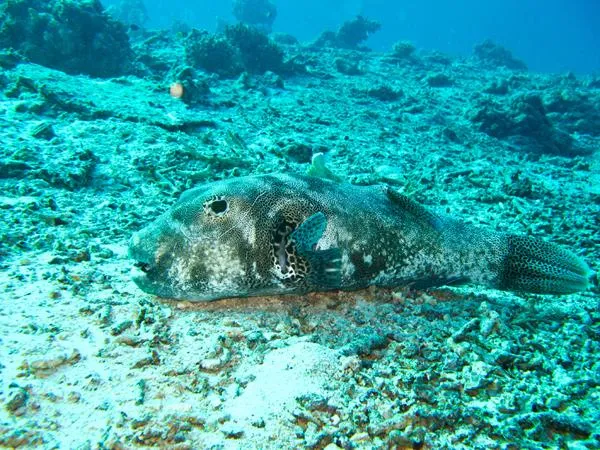
They make great pets — quiet, docile, friendly enough — but do fish sleep?
Scientists have found that most fish do sleep, and as with humans, they don't always get the shut-eye they'd like. A new study shows pet zebrafish can become insomniacs — especially when scientists mess with their biology.
Common aquarium pets, zebrafish have no eyelids, so scientists have wondered whether the fish get any sleep. The new research, detailed in a 2012 issue of the journal PLoS Biology, suggests the fish do indeed take naps and can experience sleepless nights.
The findings have implications for understanding human sleep problems. The neurological disorder narcolepsy affects about one in 2,000 people in the United States, plaguing them with excessive daytime sleepiness, interrupted nighttime sleep, bouts of muscle paralysis that cause a narcoleptic to collapse, and dream-like hallucinations during sleep.
In past research, Emmanuel Mignot, a professor of psychiatry and behavioral sciences at Stanford University, found that narcoleptic Dobermans and Labradors with a malfunctioning "hypocretin" brain receptor showed signs of narcolepsy similar to the symptoms in humans.
Mignot, lead author Tohei Yokogawa of Stanford and their colleagues monitored zebrafish in aquaria, finding when the little swimmers dozed off they drooped their tails and spent most of the night beneath the water's surface or at the bottom of their tanks.
Then they monitored the snooze patterns of normal zebrafish and mutant zebrafish that lacked functional hypocretin receptors.
Get the world’s most fascinating discoveries delivered straight to your inbox.
Overall, snooze times for the mutant zebrafish decreased by 30 percent compared with the normal zebrafish. And when the mutants did finally drift off, they remained asleep only half as long as normal fish.
The researchers say zebrafish will provide a cheap and powerful animal model for studying sleep disorders.
Follow Life's Little Mysteries on Twitter @llmysteries. We're also on Facebook & Google+.
