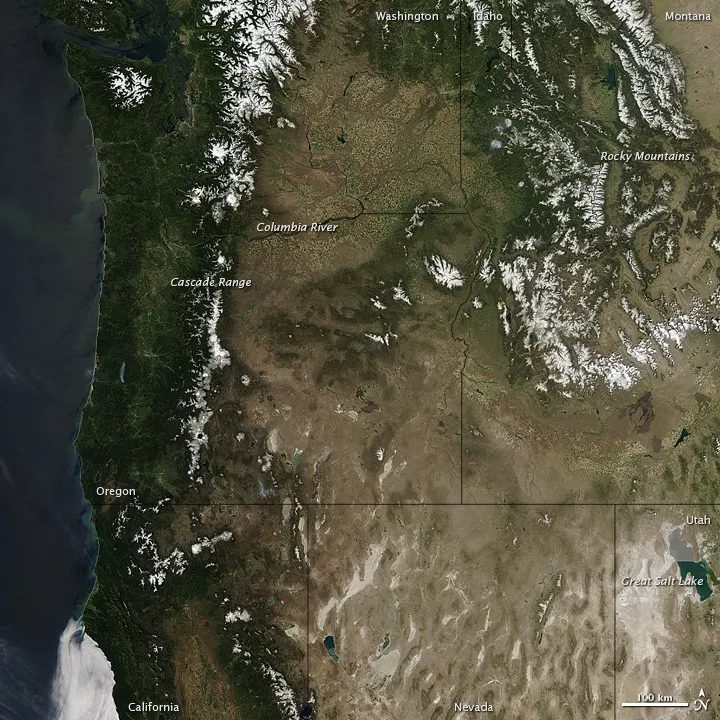
Satellite Spies Sunny Skies over Pacific Northwest
Get the world’s most fascinating discoveries delivered straight to your inbox.
You are now subscribed
Your newsletter sign-up was successful
Want to add more newsletters?
Delivered Daily
Daily Newsletter
Sign up for the latest discoveries, groundbreaking research and fascinating breakthroughs that impact you and the wider world direct to your inbox.
Once a week
Life's Little Mysteries
Feed your curiosity with an exclusive mystery every week, solved with science and delivered direct to your inbox before it's seen anywhere else.
Once a week
How It Works
Sign up to our free science & technology newsletter for your weekly fix of fascinating articles, quick quizzes, amazing images, and more
Delivered daily
Space.com Newsletter
Breaking space news, the latest updates on rocket launches, skywatching events and more!
Once a month
Watch This Space
Sign up to our monthly entertainment newsletter to keep up with all our coverage of the latest sci-fi and space movies, tv shows, games and books.
Once a week
Night Sky This Week
Discover this week's must-see night sky events, moon phases, and stunning astrophotos. Sign up for our skywatching newsletter and explore the universe with us!
Join the club
Get full access to premium articles, exclusive features and a growing list of member rewards.
Clear skies gave NASA's Aqua satellite an unobstructed view of the famously cloudy Pacific Northwest from Washington to Utah on May 12.
Snow caps the peaks of the Rocky Mountains, the Cascades, and isolated mountains outside these ranges. Snow cover recedes in these mountain ranges as summer progresses, but some peaks sport ice year round, and both the Cascades and the Rockies are home to multiple glaciers.
West of the Cascades, a verdant coastal plain stretches toward the Pacific Ocean. Separating Washington and Oregon, the Columbia River meanders through the relatively arid interior and coastal plain, en route to the ocean.
To the south, the landscape of Nevada and Utah is especially arid, with north-south mountains separated by dry valleys. In the southeast, the two-toned Great Salt Lake sprawls over northern Utah, immediately east of the Great Salt Lake Desert, the source of occasional dust storms.
Red dots in the image indicate individual wildfires.
The cloud-free skies over the western United States proved short lived. Within a couple days, clouds pushed eastward from the Pacific Ocean.
Get the world’s most fascinating discoveries delivered straight to your inbox.