














Smithsonian's New Giant Pacific Octopus Named

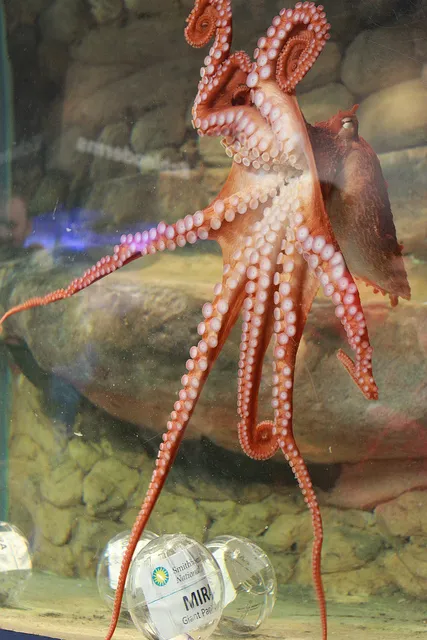
The National Zoo's new Giant Pacific octopus is one curious creature. Now it has a name to match its personality: Pandora.
The octopus had a chance to pick its own name by choosing one of four names dropped into its tank. When the octopus didn't touch one of the objects in its tank containing the names, a blindfolded keeper used a net to pick the name randomly. The other names, submitted by the finalists in the Washington Post's KidsPost naming contest, were Mirage, Inkling and Odysseus.
"I'm very excited because they chose my name and it'll be a good name for this octopus," said Trinity Kimberly, age 10, from Sterling, Va. "They described the octopus as curious and Pandora means curious."
Keepers placed each name on a placard name tag and dropped the name tags in plastic balls into the octopus tank, providing the octopus with its first so-called enrichment items since the charismatic cephalopod arrived at the National Zoo in November. Zookeepers use enrichment items to stoke the curiosity of octopuses, which are very intelligent animals and natural explorers.
The new octopus will ultimately help the zoo learn more about octopod mysteries, such as how to encourage the animals' unique behaviors. Staff and volunteers will introduce enrichment items and observe whether the octopus explores the objects, which is a natural behavior. The KidsPost contest received more than 300 entries from kids ages 5 to 15 over two weeks, and the keepers narrowed that list down to the four finalists.
"We are overwhelmed by the response from children not only in the D.C. community, but from all over the world who entered this contest," said Alan Peters, curator of the zoo's invertebrate exhibit. "The staff selected names that were followed by clever descriptions that highlighted the unique characteristics and mysterious nature of our octopus. We were particularly thrilled with many of the entries because they continued with our theme of Greek mythological names and the zoo's use of the Greek form of the word octopus, which is octopuses."
The new octopus is about 1.5 years old, which means that it is still too early to determine the animal's sex. It will take time for the octopus to mature before the zoo can do so.
Get the world’s most fascinating discoveries delivered straight to your inbox.
The giant Pacific octopus is the largest octopus species in the world. The octopuses emerge from eggs only a little larger than a grain of rice, but as adults can weigh hundreds of pounds, with an arm span of more than 12 feet (3.6 meters). Zookeepers anticipate that the new octopus will grow to be more than 10 times its current size over the next year. Octopuses, like cuttlefish and squid, can change their skin texture and color as a defense, making them masters of camouflage.
Follow OurAmazingPlanet for the latest in Earth science and exploration news on Twitter @OAPlanet and on Facebook.
