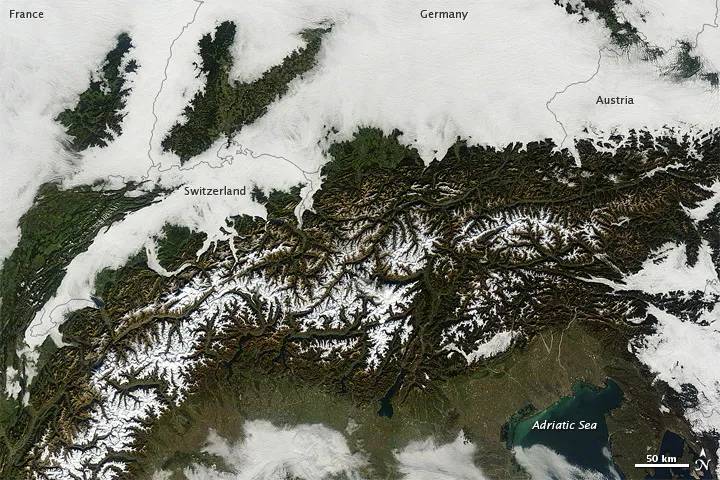
Low Clouds Shroud Europe
Get the world’s most fascinating discoveries delivered straight to your inbox.
You are now subscribed
Your newsletter sign-up was successful
Want to add more newsletters?
Delivered Daily
Daily Newsletter
Sign up for the latest discoveries, groundbreaking research and fascinating breakthroughs that impact you and the wider world direct to your inbox.
Once a week
Life's Little Mysteries
Feed your curiosity with an exclusive mystery every week, solved with science and delivered direct to your inbox before it's seen anywhere else.
Once a week
How It Works
Sign up to our free science & technology newsletter for your weekly fix of fascinating articles, quick quizzes, amazing images, and more
Delivered daily
Space.com Newsletter
Breaking space news, the latest updates on rocket launches, skywatching events and more!
Once a month
Watch This Space
Sign up to our monthly entertainment newsletter to keep up with all our coverage of the latest sci-fi and space movies, tv shows, games and books.
Once a week
Night Sky This Week
Discover this week's must-see night sky events, moon phases, and stunning astrophotos. Sign up for our skywatching newsletter and explore the universe with us!
Join the club
Get full access to premium articles, exclusive features and a growing list of member rewards.
From NASA's Earth Observatory:
A massive cloudbank sprawled over central Europe in early November 2011, with clouds extending from the North Sea to the foothills of the Alps. Over the crescent-shaped mountain range, skies remained clear.
The Moderate Resolution Imaging Spectroradiometer (MODIS) on NASA’s Terra satellite acquired this natural-color image on November 10. Along the southern margin of the cloud bank, Alpine foothills predominate. Only the valleys hold the low-elevation clouds, or fog, and surrounding hillsides rise above it.
Fog is simply clouds formed at ground level. Like all clouds, fog forms when the local air reaches its dew point—the temperature at which water vapor condenses into tiny droplets. Sunlight typically warms the air and burns off fog, but as autumn advances and nights lengthen, valley fog becomes more common. If unperturbed by winds, such fog can persist for days.
Shortly after MODIS acquired this image, the clouds cleared away from central Europe, leaving mostly sunny skies north of the Alps. The LANCE/EOSDIS MODIS Rapid Response Team provides twice-daily images of this region.
Get the world’s most fascinating discoveries delivered straight to your inbox.