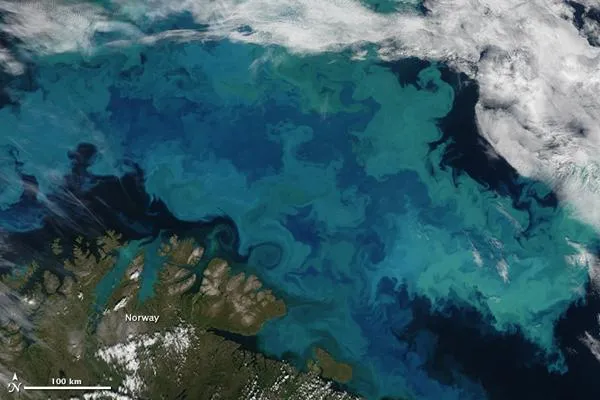
Bloom Colors Barents Sea
Get the world’s most fascinating discoveries delivered straight to your inbox.
You are now subscribed
Your newsletter sign-up was successful
Want to add more newsletters?
Delivered Daily
Daily Newsletter
Sign up for the latest discoveries, groundbreaking research and fascinating breakthroughs that impact you and the wider world direct to your inbox.
Once a week
Life's Little Mysteries
Feed your curiosity with an exclusive mystery every week, solved with science and delivered direct to your inbox before it's seen anywhere else.
Once a week
How It Works
Sign up to our free science & technology newsletter for your weekly fix of fascinating articles, quick quizzes, amazing images, and more
Delivered daily
Space.com Newsletter
Breaking space news, the latest updates on rocket launches, skywatching events and more!
Once a month
Watch This Space
Sign up to our monthly entertainment newsletter to keep up with all our coverage of the latest sci-fi and space movies, tv shows, games and books.
Once a week
Night Sky This Week
Discover this week's must-see night sky events, moon phases, and stunning astrophotos. Sign up for our skywatching newsletter and explore the universe with us!
Join the club
Get full access to premium articles, exclusive features and a growing list of member rewards.
Brilliant shades of blue and green explode across the Barents Sea in this natural color image taken by the Moderate Resolution Imaging Spectroradiometer (MODIS) on the Aqua satellite on August 14, 2011. The color is from a massive phytoplankton bloom made from millions of microscopic organisms. The milky blue color is an indicator that the bloom probably contains coccolithophores, which are plated with white calcium carbonate. Seen through ocean water, a coccolithophore bloom is bright blue. Other shades may be from other species of phytoplankton.
Phytoplankton thrive in cold ocean waters, which tend to be rich in nutrients. The area in this image is immediately north of the Scandinavian peninsula. Blooms spanning hundreds or even thousands of kilometers occur across the North Atlantic and Arctic Oceans every year. Seeing such a wide area without clouds during the bloom is a rare treat, however.
- One of the World's Roughest Stretches of Water
- Mississippi Floods May Cause Record-Breaking Dead Zone in Gulf
- Summer Ocean in Bloom Around New Zealand
Get the world’s most fascinating discoveries delivered straight to your inbox.