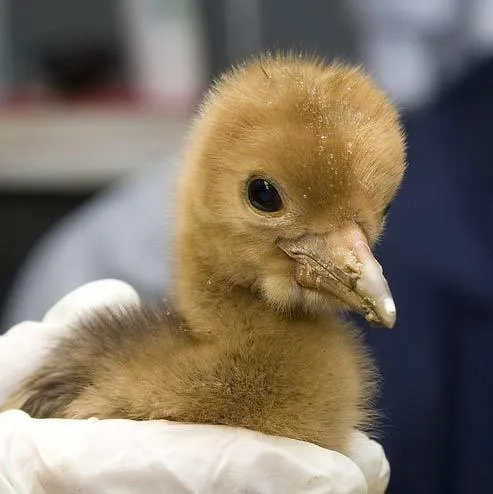
The stork has paid a visit to the wattled cranes at the National Zoo in Washington, D.C. A fluffy new chick hatched just a few weeks ago, only the third time the species has been born at the zoo.
The rare bird has a lot of growing to do. Wattled cranes (Bugeranus carunculatus) measure up to 6 feet tall (1.8 meters) when fully grown.
In addition, the chick, now covered with downy yellow feathers, will someday have bright white plumage, a red face and an impressive wattle a fleshy, brightly colored skin flap hanging from the bird's neck that, much like a dog's tail, can indicate how the large birds are feeling.
When the cranes are agitated or trying to assert dominance they will extend their wattles and constrict them when they are frightened or submissive.
Big mama: Mother crane and chick.
(Image credit: Mehgan Murphy, Smithsonian's National Zoo.)
Native to the wetlands of sub-Saharan and southern Africa , wattled cranes are the largest of the continent's six crane species, and are a vulnerable population, according the International Union for the Conservation of Nature, the independent body that assesses the status of animal populations around the world.
Estimates of the global population of the species range from 6,000 to 8,000 individuals, with the greatest number living in Zambia, a country that is home to roughly 5,500 of the birds.
Although loss of habitat due to human interference is the gravest threat to wattled cranes, the birds also fall victim to hunting for pest control and traditional medicine and collisions with power lines.
Sign up for the Live Science daily newsletter now
Get the world’s most fascinating discoveries delivered straight to your inbox.
National Zoo veterinarians examined the zoo's newest wattled crane and took a blood sample when it was four days old, which they will use to determine its sex since the gender of most baby animals isn't typically clear until weeks after birth.
For the science geek in everyone, Live Science offers a fascinating window into the natural and technological world, delivering comprehensive and compelling news and analysis on everything from dinosaur discoveries, archaeological finds and amazing animals to health, innovation and wearable technology. We aim to empower and inspire our readers with the tools needed to understand the world and appreciate its everyday awe.