













Ants Prefer Salt over Sugar

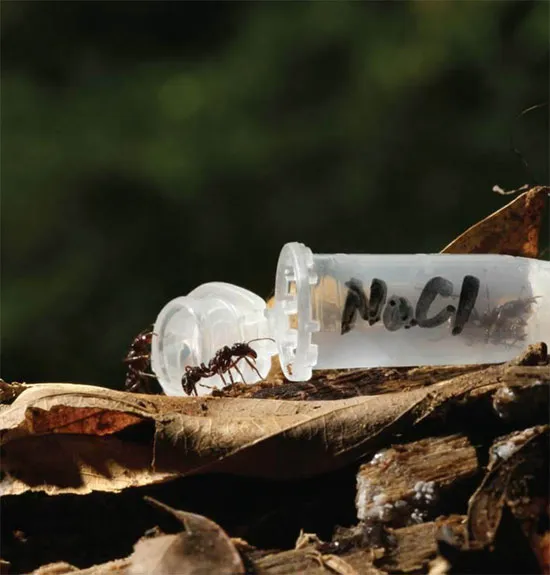
Ants have less of a sweet tooth and more of a preference for salty snacks, at least when they live in salt-poor areas far from the ocean, a new study finds.
All animals — from ants to humans — need salt to maintain their body's nerve and muscle activity and water balance.
Ants, though, typically swarm over sources of sugar because they need it for energy.
But researchers suspected those taste differences might vary with location and tested the salt-versus-sweet preferences of ants at various distances from the ocean, a source of salt.
The study, detailed in the Oct. 27 issue of the journal Proceedings of the National Academy of Sciences, was sponsored in part by the National Geographic Society and the Amazon Conservation Association.
The "cafeteria experiment" offered the ants a choice of cotton balls soaked in salt or sugar solution. Ants that lived more than 60 miles (100 kilometers) inland preferred the salt solution (which was less concentrated than the sugar solution).
This preference was mainly true of plant-eating ants, since carnivorous ants get enough salt from their prey. (Similarly herbivorous animals such as cows and deer get their salt from salt licks, while wolves and other predators get it from the bloody meat they eat.)
Get the world’s most fascinating discoveries delivered straight to your inbox.
The researchers want to see if this pattern holds for all insects and even microbes. In particular, study lead author Michael Kaspari plans to see if spraying salt on forest leaf litter cranks up ecosystem activity, just as Gatorade improves the performance of sports teams.
- Top 10 Secret Insect Weapons
- 10 Amazing Things You Didn't Know About Animals
- Images: Ants of the World
