
















Hurricane-Force Winds Batter Both Coasts
If you live along the coastal United States, hold onto something solid.
Hurricane-strength winds were clocked blowing along each coast this week, according to the National Weather Service.
On the West Coast, winds topped 96 mph (155 kph) on Dec. 30 at Whitaker Peak near Los Angeles, Calif. The winds downed power lines, leaving thousands without power, the Los Angeles Times reported.
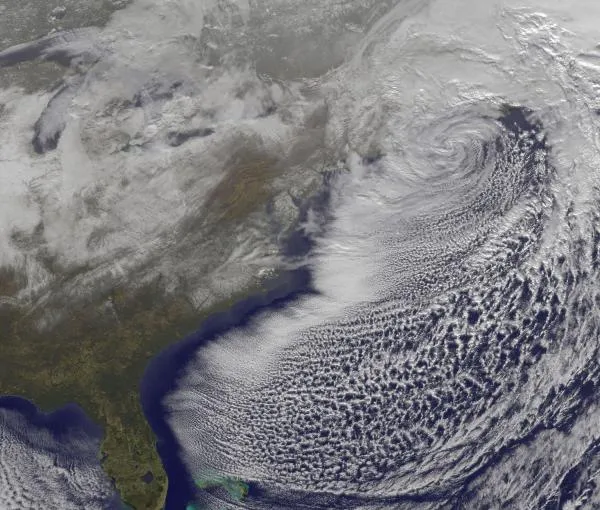
Earlier this week, during the Christmas Blizzard of 2010, the East Coast was pummeled with snow and intense winds. In Wellfleet, Mass., wind speeds were clocked at 80 mph (128.7 kph).
On the Saffir-Simpson scale of intensity, which rates hurricanes based on ranges of sustained wind speeds, the weakest hurricane, a Category One, will have sustained winds between 74 to 95 mph (119 to 153 kph). The strongest hurricane, a Category 5, will have sustained winds of 156 mph (251 kph) or stronger.
The key phrase with hurricanes is "sustained winds," which are wind speeds recorded over a longer period of time than gusts, which come in bursts. (Technically, a sustained wind speed is the peak one-minute wind at the standard meteorological observation height of 33 feet (10 meters) over unobstructed exposure, according to the National Hurricane Center).
The winds measured along the coasts were wind gusts sudden, brief increases in the speed of wind. The duration of a gust is usually less than 20 seconds, according to the National Weather Service.
Get the world’s most fascinating discoveries delivered straight to your inbox.
Neither coast had winds anywhere near as strong as the all-time record in the United States. Atop the summit of Mount Washington, in New Hampshire, a wind gust during an April 1934 storm hit 231 mph (372 kph).
- Blow-by-Blow: Snowmageddon vs. Christmas Blizzard of 2010
- Quiz: Global Weather Extremes
- The World's Weirdest Weather
Reach OurAmazingPlanet staff writer Brett Israel at [email protected]. Follow him on Twitter @btisrael.