













Why Vultures Devoured Hiker's Body in Minutes

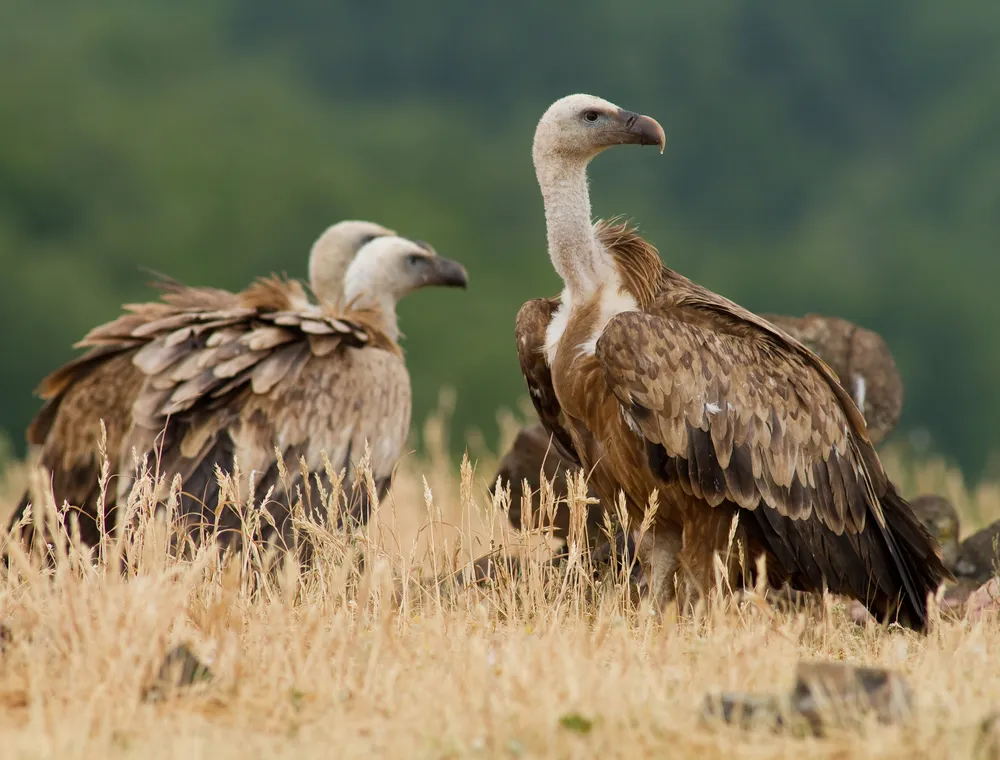
A flock of vultures devoured the body of a woman just minutes after she fell to her death while hiking in the Pyrenees Mountains in France.
The woman, 52, had been hiking with two friends when she fell about 1,000 feet (300 meters) down the side of a steep mountain. Police believed she died from injuries sustained during the fall, the Daily Mail reports.
Vultures are known to be able to sniff out the gaseous chemicals emanating from a dead body more than a mile away.
"When we first went out in the helicopter looking for the body, we saw numerous vultures, without realizing what they were doing," said Maj. Didier Pericou, of the local police, as quoted in the Daily Mail.
But by the time the police reached the body, there was little left to recover.
"There were only bones, clothes and shoes left on the ground," Pericou said. "They took 40 to 50 minutes to eat the body."
The Griffon vultures (Gyps fulvus) that consumed the body have been under considerable stress, as their primary source of food — the carcasses of cattle or other livestock — are no longer available throughout much of Europe.
Get the world’s most fascinating discoveries delivered straight to your inbox.
Due to concerns about the spread of "mad cow disease" (bovine spongiform encephalopathy, or BSE), animals carcasses are now burned per European Union regulations.
As a result, the scavengers are reportedly becoming increasingly aggressive, and some farmers claim vultures are now attacking live animals.
Worldwide, populations of vultures are under increasing stress. In parts of Asia, vultures have largely disappeared because farmers often use the anti-inflammatory drug diclofenac on their livestock: The drug is fatal to vultures.
After many years of population declines, however, some vulture populations have started to rebound as diclofenac has been banned.
Farmers in France, however, have renewed requests to shoot the protected Griffon vultures, claiming they are a threat to their livestock.
But conservationists claim the real threat is to the vultures. "We are seeing three-figure vulture flocks over Belgium and Holland. These birds are fanning out across Europe in search of food," Grahame Madge, of the Royal Society for the Protection of Birds, as quoted in the Daily Mail.
Follow Marc Lallanilla on Twitter and Google+. Follow us @livescience, Facebook & Google+. Original article on LiveScience.com.
