 Live Science Plus





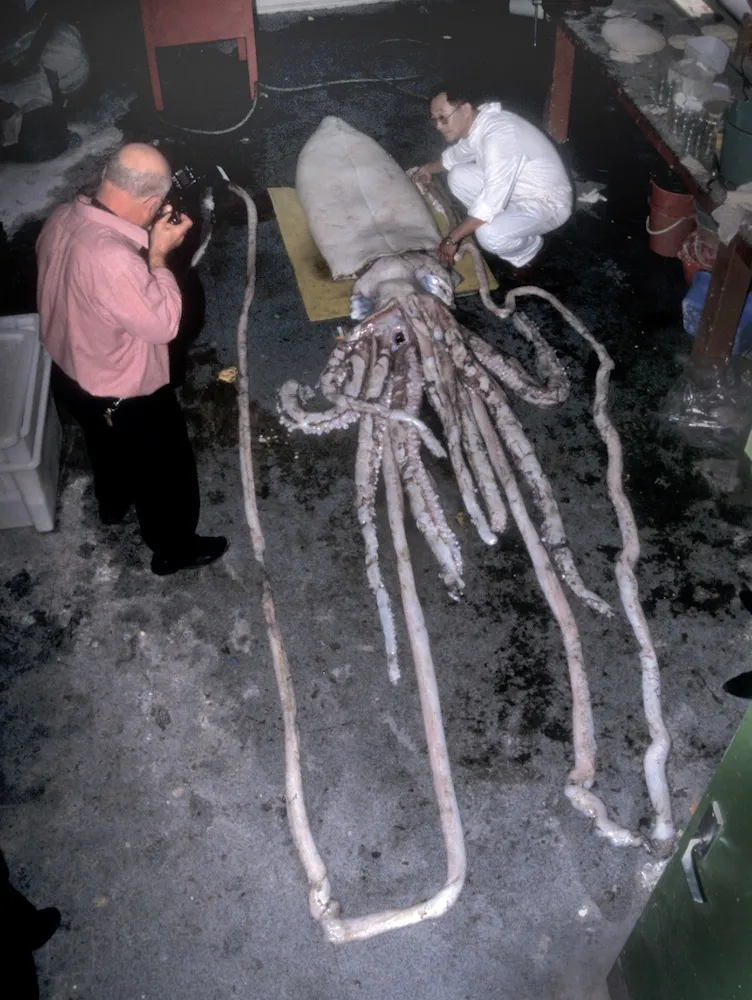
Though they roam the deep sea around the globe, enigmatic giant squid are all part of the same species, new research finds.
The new study reveals that the genetic diversity of giant squid (Architeuthis) is remarkably low — far lower than that of other marine species examined, said study researcher Tom Gilbert of the University of Copenhagen. The findings suggest that the squid intermingle and mate across the globe.
"The results are extremely surprising," Gilbert told LiveScience.
Article continues belowMonster of the deep
Giant squid are mysterious creatures. They dwell in the deep ocean, making them difficult to observe in their natural habitats. In fact, no one had observed a live giant squid in the wild until 2004. The first video of a live giant squid wasn't released until this year. The animals appear to grow as long as 60 feet (18 meters) and are carnivores that prey on fish and other squid.
Most of what scientists know about the creatures comes from corpses found washed up on beaches or in sperm whale stomachs (the giant squid are apparently a common whale meal). Once in a while, a fishing trawler will entangle a giant squid in its nets. No one had ever published data on giant squid genetics before now.
Gilbert and his colleagues wanted to know if genetics could open any windows into giant squid life, particularly the size and diversity of their populations. No one even knew for sure how many giant squid species might be out there. Estimates ranged from one all the way up to 21, though the highest numbers were unlikely. [Release the Kraken! Giant Squid Photos]
Squid genes
The researchers extracted DNA from 43 soft-tissue samples from giant squid. Some of the samples came from squid found in whale stomachs or washed ashore, whereas others were frozen samples from giant squid dredged up by fishing trawlers. The scientists analyzed mitochondrial DNA, or mDNA, which is found in tiny cell structures called mitochondria. These structures help cells convert energy into a usable form, and their DNA is separate from the DNA in a cell's nucleus; mDNA is inherited from the maternal line.
The mDNA sequences were extremely similar among all samples, the researchers found. The samples exhibited more than 20 times less genetic diversity than other local squid populations, Gilbert said, and there was no population structure. The results suggest that giant squid are all one species. Even more, they're all part of the same big population, meaning there don't seem to be groups of giant squid that interact only with one another. Geography doesn't seem to be a barrier to their breeding, to the extent that any giant squid in the world is a potential partner for any other giant squid in the global oceans.
That's amazing, Gilbert said, given that giant squid vary substantially in body form and live everywhere except at the poles.
"It's very, very hard to explain," he said.
The researchers are now working to confirm the results using nuclear DNA from the giant squid, in order to rule out that possibility that the similarities in mDNA could be some quirk of evolution. If the results hold, they suggest the giant squid may have undergone a recent population expansion and that the young squid larvae disperse over massive distances, traveling randomly across the globe.
"There are huge unexplored questions," Gilbert said.
The researchers report their findings today (March 19) in the journal Proceedings of the Royal Society B.
Follow Stephanie Pappas on Twitter and Google+. Follow us @livescience, Facebook & Google+. Original article on Live Science.

