














The Dirt on Dirt: It's Mostly from Plains

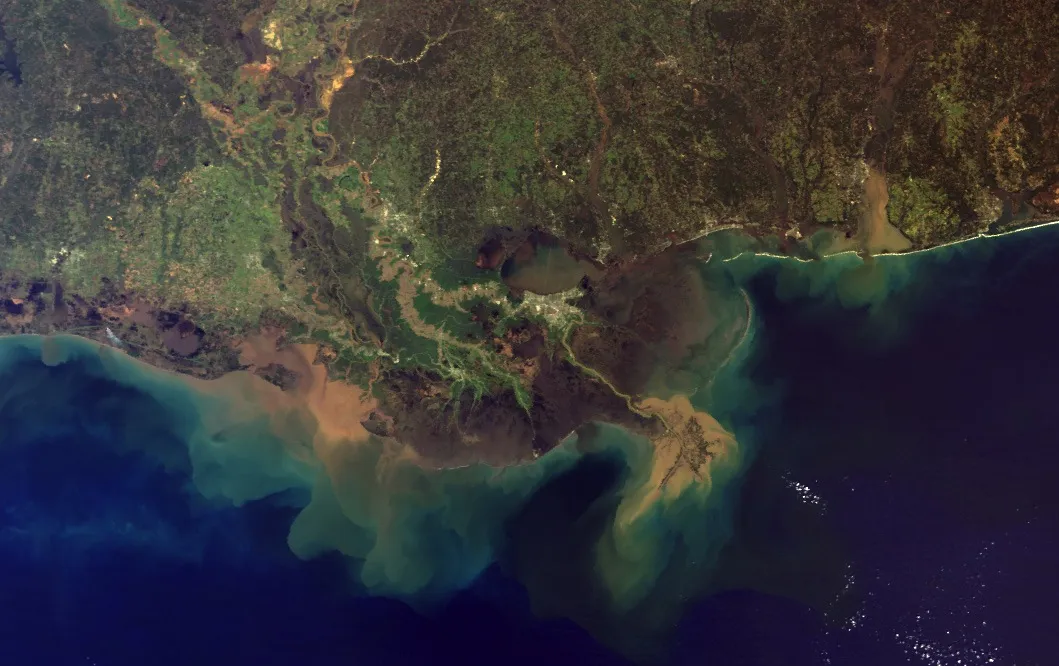
The dirt in Spain — and the rest of the planet — comes mainly from the plain.
Most of the world is flat, and more than 90 percent of the world's sediment comes from these gentle, low-lying slopes, a new study finds. The discovery overturns accepted geologic wisdom, which holds that steep mountain rivers create most of the sediment carried to the world’s oceans. These sediments from relatively flat areas also take the prize for trapping the most carbon in dirt.
"I learned [sediment] all came from the mountains," said Jane Willenbring, a geologist at the University of Pennsylvania and lead author of the study. "The result is quite unexpected."
Whether its sand, mud or clay, knowing the dirt on the planet's sediment is key to understanding how surface changes affect climate. Erosion draws carbon dioxide from the atmosphere, trapping it in soils and rocks. "Most people, if they're geologists, thought mountains, and the uplift of mountains, were a really good way of sequestering [carbon dioxide] over a really long time scale," Willenbring said. "But in fact, where carbon sequestration happens is in these lowland rivers and places that are gently sloping," she told OurAmazingPlanet.
One of the ways carbon ends up in dirt is through chemical weathering, which occurs when rock turns into sediment. Carbon dioxide molecules and rain combine to dissolve rock, and the weathering products include sand, clay and other types of sediment. Physical weathering, such as from wind or glaciers, can also grind down rocks into dirt.
Willenbring and her colleagues examined erosion rates and topography around the world with a relatively new technique that looks at what is called cosmogenic nuclides. They analyzed the movement of sediment with radioactive isotopes of the element beryllium produced by cosmic rays (high-energy particles that rain down on Earth from space). Isotopes are created when beryllium in rocks exposed at the surface are bombarded by cosmic rays, producing varieties of the element that have differing numbers of neutrons. The concentration of isotopes is linked to the erosion rate.
Low-lying areas, such as those dominated by rivers, far outpaced the planet's tiny fraction of steep, mountainous slopes when it comes to making dirt, the study found.
Get the world’s most fascinating discoveries delivered straight to your inbox.
"It turns out that we shouldn't expect mountain erosion to impact global climate much, and that the flatlands are very important instead," Willenbring said. "We've been looking at the problem in a wrong way."
The study will appear in the March 2013 issue of the journal Geology.
Reach Becky Oskin at [email protected]. Follow her on Twitter @beckyoskin. Follow OurAmazingPlanet on Twitter @OAPlanet. We're also on Facebook and Google+.
