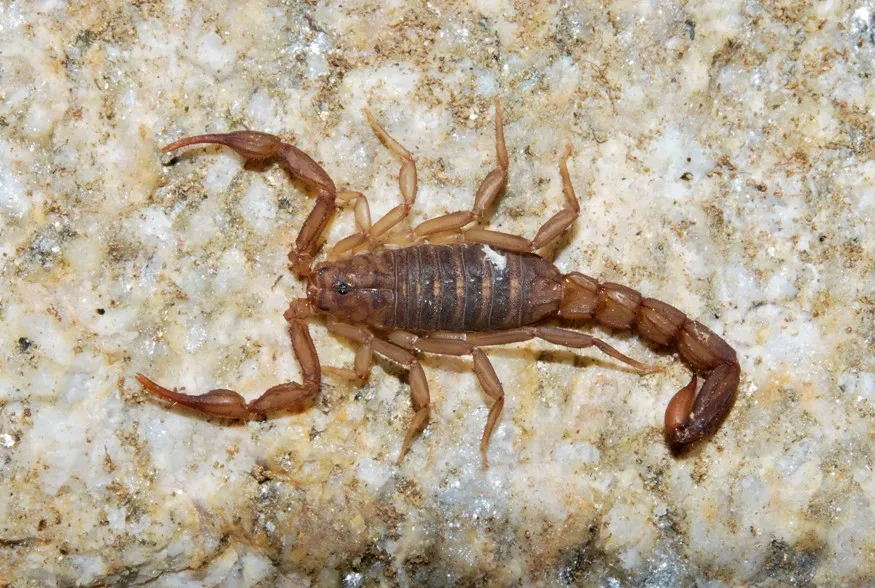
A new species of scorpion has been discovered in the mountains just outside the city of Tucson, Ariz.
The newfound creature is only about 1 inch (27 millimeters) long and sports a dapper brown color. It lives in the oak forests in the Santa Catalina Mountains, at an elevation of around 5,900 feet (1,800 meters), according to a study describing the new scorpion published recently in the journal ZooKeys.
It's the ninth new species of mountain scorpion discovered in Arizona in the past six years, more than doubling the number of known scorpion species in the area. It has been named Vaejovis brysoni, after the man who collected the first specimen, Robert Bryson, Jr., who was looking for a different animal at the time, according to a release from the journal's publisher.
Using ultraviolet flashlights, researchers found members of the new scorpion tribe at night alongside the Catalina Highway.
Like other scorpions, this species often carries its pale-colored juveniles on its back. The arachnid can carry an average of 24 baby scorpions, the study found. It's unclear how venomous the creature may be.
"This latest new scorpion is a prime example of the amazing diversity of life still to be discovered, right here in 21st century America," said researcher and study co-author Richard F. Ayrey, in the statement.
The new scorption, Vaejovis brysoni, with juveniles on its back.
Douglas Main loves the weird and wonderful world of science, digging into amazing Planet Earth discoveries and wacky animal findings (from marsupials mating themselves to death to zombie worms to tear-drinking butterflies) for Live Science. Follow Doug on Google+.