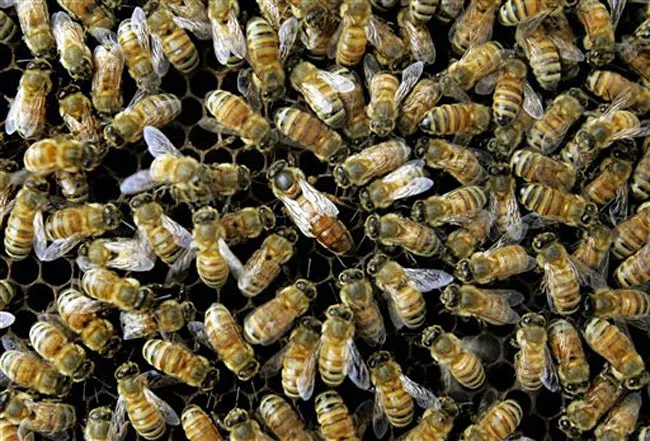
Bees Outnumber Birds and Mammals
Get the world’s most fascinating discoveries delivered straight to your inbox.
You are now subscribed
Your newsletter sign-up was successful
Want to add more newsletters?
Delivered Daily
Daily Newsletter
Sign up for the latest discoveries, groundbreaking research and fascinating breakthroughs that impact you and the wider world direct to your inbox.
Once a week
Life's Little Mysteries
Feed your curiosity with an exclusive mystery every week, solved with science and delivered direct to your inbox before it's seen anywhere else.
Once a week
How It Works
Sign up to our free science & technology newsletter for your weekly fix of fascinating articles, quick quizzes, amazing images, and more
Delivered daily
Space.com Newsletter
Breaking space news, the latest updates on rocket launches, skywatching events and more!
Once a month
Watch This Space
Sign up to our monthly entertainment newsletter to keep up with all our coverage of the latest sci-fi and space movies, tv shows, games and books.
Once a week
Night Sky This Week
Discover this week's must-see night sky events, moon phases, and stunning astrophotos. Sign up for our skywatching newsletter and explore the universe with us!
Join the club
Get full access to premium articles, exclusive features and a growing list of member rewards.
There are more species of bees buzzing around the globe than there are species of mammals and birds combined, a new census shows. This new count of bee species, conducted by John S. Ascher of the American Museum of Natural History in New York, comes from a list he compiled of more than 19,200 described bee species. "Most people know of honey bees and a few bumble bees, but we have documented that there are actually more species of bees than of birds and mammals put together," Ascher said. Ascher's census documents 2,000 more described species than the most recent definitive list published eight years ago. Cataloguing the world's species, especially small insects, is an enormous challenge; scientists don't even know how many total species live on the planet — estimates run from 5 million to 100 million total species, though only 2 million have been identified. Taking a head count of the world's bees is important though because the busy insects are critical to pollinating crops. Honey bees, such as Apis mellifera, are the most economically important pollinators. But while honey bees are the most well-known bee faces, most bees don't make honey or live in hives like this social species. Honey bee numbers have dropped precipitously in recent years due to an unexplained phenomenon dubbed "colony collapse disorder," which has wiped out hives throughout the United States. The checklist of bee species has been listed online on the Discover Life website, a searchable database of species classifications.
- Top 10 Secret Insect Weapons
- Greatest Mysteries: How Many Species Exist on Earth?
- Images: Backyard Bugs
Get the world’s most fascinating discoveries delivered straight to your inbox.

Andrea Thompson is an associate editor at Scientific American, where she covers sustainability, energy and the environment. Prior to that, she was a senior writer covering climate science at Climate Central and a reporter and editor at Live Science, where she primarily covered Earth science and the environment. She holds a graduate degree in science health and environmental reporting from New York University, as well as a bachelor of science and and masters of science in atmospheric chemistry from the Georgia Institute of Technology.