













Sandy Speeds Up, Risk of Deadly Winds Increases Onshore

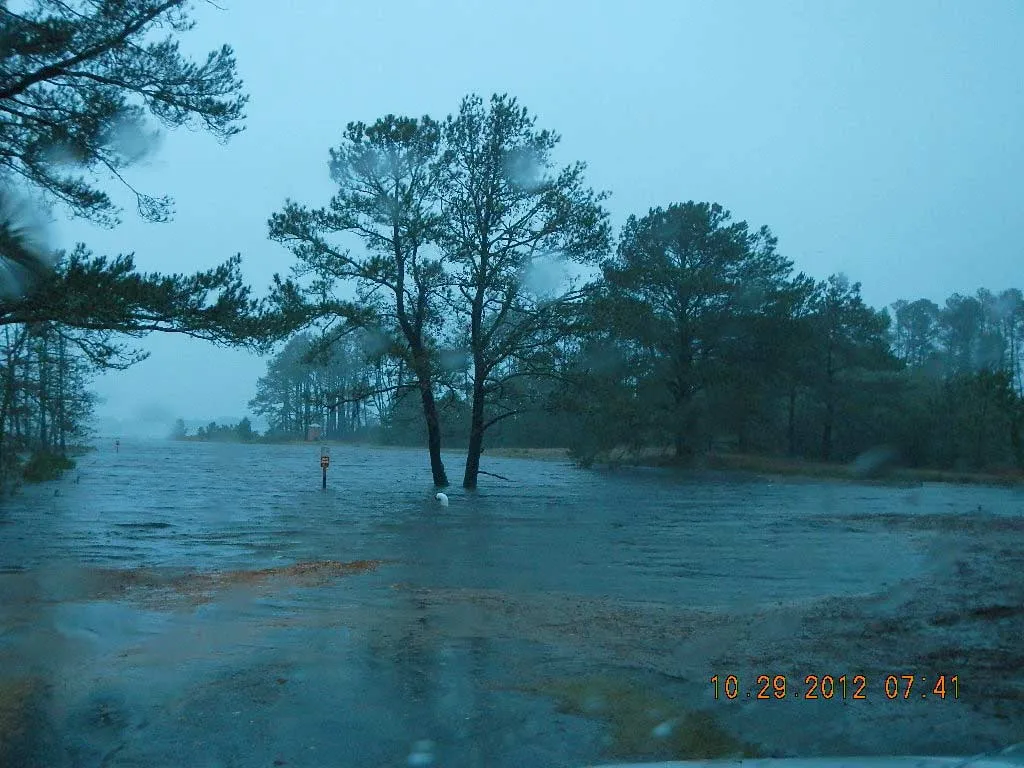
Hurricane Sandy is expected to make landfall hours earlier than previously expected, likely reaching the coast of southern New Jersey or central Delaware early this evening.
According to the National Weather Service, Sandy is racing toward the coast at 28 miles per hour (44 kilometers per hour). The storm is blowing with maximum sustained winds of 90 mph (150 kph). Landfall is now estimated at between 6 p.m. and 7 p.m. EDT, hours earlier than previous forecasts of midnight or so.
Already, coastal areas are feeling the effects of the storm. Along the coast of New Jersey, winds have been gusting more heavily all day, with one station in the barrier island community of Harvey Cedars recording a 69 mph (111 km) gust. In New York City, a crane atop a partially-constructed high-rise collapsed, forcing evacuations in nearby buildings. The National Weather Service has issued a high wind warning for New York City and its suburbs, forecasting sustained winds of 35 to 45 mph (56 to 72 kph) with gusts up to 80 mph (129 kph).
Wind speed is measured with instruments called anemometers, which simply record passing airspeed and thus take into account the storm's overall movement and its internal winds.
Follow Stephanie Pappas on Twitter @sipappas or LiveScience @livescience. We're also on Facebook & Google+.
Get the world’s most fascinating discoveries delivered straight to your inbox.

Stephanie Pappas is a contributing writer for Live Science, covering topics ranging from geoscience to archaeology to the human brain and behavior. She was previously a senior writer for Live Science but is now a freelancer based in Denver, Colorado, and regularly contributes to Scientific American and The Monitor, the monthly magazine of the American Psychological Association. Stephanie received a bachelor's degree in psychology from the University of South Carolina and a graduate certificate in science communication from the University of California, Santa Cruz.