













Why Humans Bother With Emotions
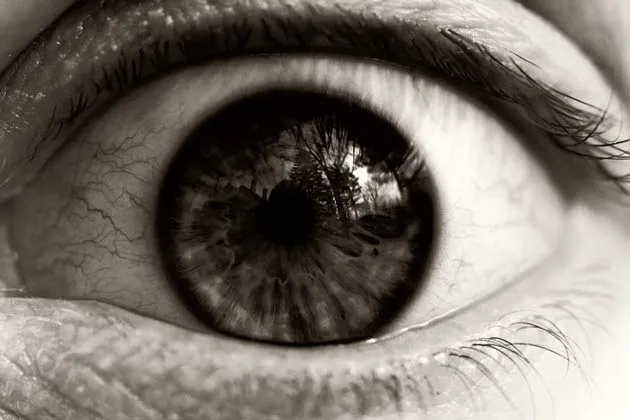
The last few weeks have been a roller coaster of emotions for me.
I'm sad, I'm angry, I'm happy, I'm anxious.
At the end of the day, I'm physically and mentally exhausted from the whirling dervish that seems to have taken over my head.
Why do we have emotions? Wouldn't it better to have the heart and soul of a lizard and feel nothing at all?
It's easy to understand why we have good emotions. Happy people live happy lives and make for happy mates. Presumably, all that happiness translates into passing on genes. Other positive emotions such as love and attachment are, in fact, essential for bringing up children, those little packets of genes.
Harder to explain are the "bad" emotions such as fear, anxiety, anger and hate. Why would evolution fill our heads with such negativity?
It may be that emotionality comes as an all-inclusive package and so you have to take the good with the bad; with love comes its evil twin hate, with happiness comes the flip side of sadness.
Get the world’s most fascinating discoveries delivered straight to your inbox.
But evolutionary psychiatrist Randolph Nesse of the University of Michigan thinks that individual emotions are actually adaptations selected by evolution to help us cope with specific situations.
Nesse calls emotions "the mind's software." Faced with a sad situation, the mind brings up the sadness program to cope, and when the situation brightens, the mind get into the happiness loop.
For Nesse, it's not so much about the specific emotions, as the situations, because many emotions have similar cognitive, psychological and physiological effects. Faced with a situation, our feelings ratchet up and any number of emotions can, for example, put the body on alert, shut it down, change thinking patterns or motivate behavior. What matters is not so much the name of some emotions as what the mind and body does with it.
The bottom line is that over evolutionary time, those emotions that have been useful in keeping people alive, compelling them to mate and bring up offspring, and so they have been have been hammered into our brains, even if we don’t like them.
And since humans are fundamentally social animals, Nesse also points out that we have specific social emotions that are also deeply embedded in human nature. We are animals that, in the deepest sense, rely on others for survival. And so we don't just have personal emotions, we have ones that ensnare us with the actions and emotions of others.
"If you go ahead and do something that makes the other person angry, you are likely to feel guilty," writes Nesse.
That's why we are able to trust others (the good part) and feel betrayed (the bad part), and here, too, we apparently have to take the good with the bad.
Fact is, without these complex social emotions that involve others, we'd be stuck back in the forest, living alone in the trees.
Nesse's point is that all emotions are "good," at least in the evolutionary sense. They are there to help us, and they bring hope. Even in the depth of sadness, we always know that the opposite feeling of happiness might bubble up.
And how would we recognize the happy part without experiencing the sad part?
- Top 10 Mysteries of the Mind
- Top 10 Amazing Animal Abilities
- Emotional Wiring Different in Women and Men
Meredith F. Small is an anthropologist at Cornell University. She is also the author of "Our Babies, Ourselves; How Biology and Culture Shape the Way We Parent" (link) and "The Culture of Our Discontent; Beyond the Medical Model of Mental Illness" (link).