















Twist on 'Marshmallow Test' Shows Environment Affects Self-Control

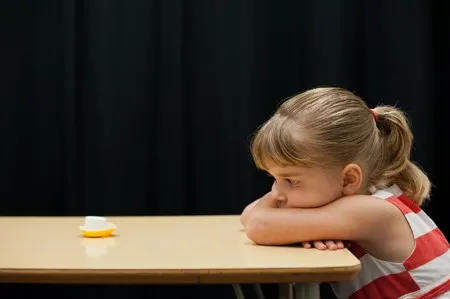
In the famous "marshmallow experiment" four decades ago, researchers at Stanford University presented more than 600 four-year-olds with a marshmallow and told the kids that if they could resist eating it for an unspecified amount of time (actually 15 minutes), they would get two marshmallows.
Researchers followed up with the participants over the next several years and found that those who were able to wait for the second marshmallow as children tended to enjoy more success later in life, from higher scores on their SATs to lower body mass index.
A new small study that plays on this experiment suggests that the ability to delay gratification might be impacted as much by the environment as by innate self-control.
"Being able to delay gratification — in this case to wait 15 difficult minutes to earn a second marshmallow — not only reflects a child's capacity for self-control, it also reflects their belief about the practicality of waiting," the new study's lead author, Celeste Kidd, a doctoral student at the University of Rochester, said in a statement. "Delaying gratification is only the rational choice if the child believes a second marshmallow is likely to be delivered after a reasonably short delay."
In the study, Kidd and her team gave 28 children, age three to five, a piece of paper to decorate for a create-your-own-cup kit.
Half of the group — those in the "unreliable" environment — were given used crayons but told that a researcher would bring them a bigger and better set of art supplies if they could wait. However, after a few minutes the researcher came back empty handed and said, "I'm sorry, but I made a mistake. We don't have any other art supplies after all. But why don't you use these instead?" referring to the crayons.
The researcher then put a tiny sticker on the table and told the children that they would get a big selection of better stickers to use if they could wait. Again, the researcher returned with nothing.
Get the world’s most fascinating discoveries delivered straight to your inbox.
Meanwhile, the other 14 kids in the "reliable" environment were offered the same art supplies and stickers but the researcher actually brought them the promised materials.
Then all of the kids took the classic marshmallow test. Only one of the 14 in the unreliable group waited the entire 15 minutes, while nine in the reliable condition held out for the second marshmallow, the researchers found. On average, kids in the unreliable group waited for about three minutes before grabbing the marshmallow in front of them, while those in the reliable set lasted about 12 minutes.
The researchers said this wide gap suggests that kids' actions are based on rational decisions about their environment and the likelihood of getting a reward and it bolsters previous research that showed children are sensitive to uncertainty in future rewards.
Kidd explained in a statement that her research was inspired by a volunteering stint at a homeless shelter in California.
"Everyone shared one big area, so keeping personal possessions safe was difficult," Kidd said. "When one child got a toy or treat, there was a real risk of a bigger, faster kid taking it away. I read about these studies and I thought, 'All of these kids would eat the marshmallow right away.'"
Kidd's results, which were published online today (Oct. 11) in the journal Cognition, are consistent with previous research showing that kids with absent fathers are more likely to prefer instant rewards over a bigger delayed reward.
Follow LiveScience on Twitter @livescience. We're also on Facebook & Google+.
