













Bionic Suit Helps Paralyzed Patients Walk Independently

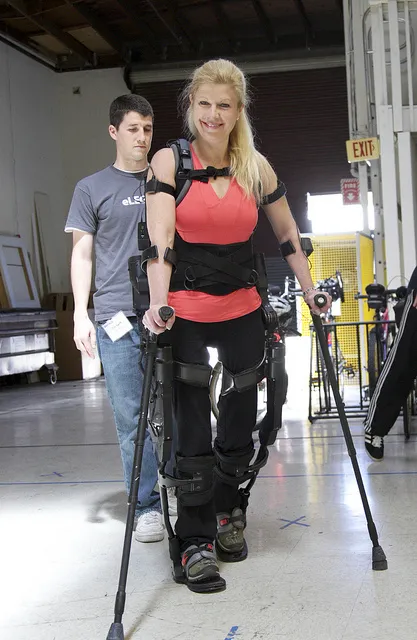
A new robotic suit that shipped to rehab centers in the U.S. this year is starting to gain some fans among patients and doctors. The suit braces the legs of people with spinal cord injuries. The patient uses his arms to push against metal crutches, activating motors in the bionic legs and allowing him to stand and walk independently.
"It’s awesome — I love getting back up," 17-year-old Joey Abicca told the New York Times. Abicca demonstrated a suit made by Ekso Bionics for Project Walk, a nonprofit in San Diego, Calif., that is trying to raise money to buy one of the suits for its rehabilitation center, 10News reported. Abicca lost the use of his legs when he was 14, after accidentally getting pinned under a piece of construction equipment.
Since Ekso shipped its first suit in February, it has sold about 15 devices to rehab centers in the U.S. The suits cost $140,000 each and require a $10,000 annual service contract, the New York Times reported.
Ekso says it's the first to make a robotic "exoskeleton" — a supportive skeleton strapped on the outside of the body — that carries its own power supply and doesn't need cables. The current version of the suit is designed for rehab centers only, but the company aims to make a lighter version for home use by 2014, 10News reported.
At Project Walk, physical therapists hope the Ekso suit will be a more precise replacement for a process during which therapists physically move a patient's legs while the patient leans on a walker, the North County Times reported.
Ekso isn't the only company interested in using robotic limbs to enhance people's natural ones. Several companies and labs are studying exoskeletons for therapy, home use or gaining superhuman powers. In May, a woman who is paralyzed from the waist down completed a marathon using a ReWalk suit, which is currently under study for people with paraplegia. Meanwhile, the U.S. military is funding development of a bionic body to help soldiers carry heavier loads.
Sources: New York Times, 10News, North County Times
Get the world’s most fascinating discoveries delivered straight to your inbox.
This story was provided by InnovationNewsDaily, a sister site to LiveScience. Follow InnovationNewsDaily on Twitter @News_Innovation, or on Facebook.
