That's Not Gross! Sexual Arousal Lessens Disgust

Feeling disgusted? For women, chasing away the stomach-churning emotion may be as easy as seeking sexual arousal.
Disgust is a powerful feeling that helps defend people from potentially sickening circumstances. Objectively, sexual intercourse could be seen as one of those circumstances, involving, as it does, saliva and other bodily fluids. But new research raises the interesting question of how a vital but potentially icky activity such as sex can seem pleasant and doable.Perhaps it's because sexual arousal somehow dampens the natural disgust response.
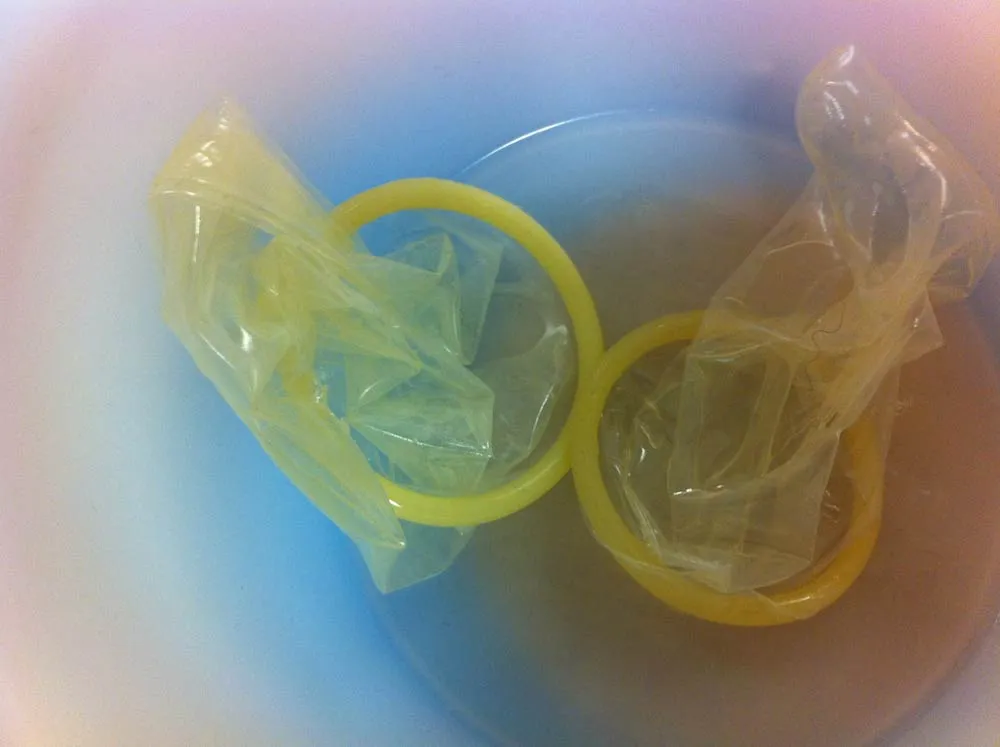
To delve into the mysteries of disgust and sex, investigators asked 90 heterosexual female volunteers to complete 16 different tasks that seemed revolting, such as drinking juice from a cup with a large insect in it, wiping their hands with a used tissue, or sticking their fingers in a bowl of used condoms. The women were not aware that the insect was actually made of plastic, the tissue was only colored with yellowish-brown ink to make it appear used, and the condoms were new and only covered in lubricant.
The scientists also had a third of the women watch female-friendly erotica — "de Gast" (Dutch for "The Guest") by Christine le Duc. Another third of the women watched adrenaline-inducing films about sports such as rafting or skydiving. The last third, the control group, just saw footage of a train ride.
The researchers found that the women exposed to sexually arousing material found activities that might otherwise seem sexually disgusting, such as touching seemingly used condoms, significantly less nasty than the other participants. To a lesser extent, sexually aroused women also found non-sex-related disgusting tasks less foul.
"From a clinical angle, these findings give us insight into important problems of sexual arousal and sexual pain disorders — for example, vaginismus and dyspareunia," researcher Charmaine Borg, a psychologist at the University of Groningen in the Netherlands, told LiveScience. "These are two disorders that make penile-vaginal penetration either completely impossible or possible but with pain."
"Perhaps in women with sexual dysfunctions such as dyspareunia or vaginismus, arousal does not impact on disgust," Borg said. This could in turn lead to problems during sexual encounters such as lack of proper natural lubrication, "which in turn could increase friction and cause problems such as pain during intercourse."
Get the world’s most fascinating discoveries delivered straight to your inbox.
The scientists detailed their findings online Sept. 12 in the journal PLoS ONE.