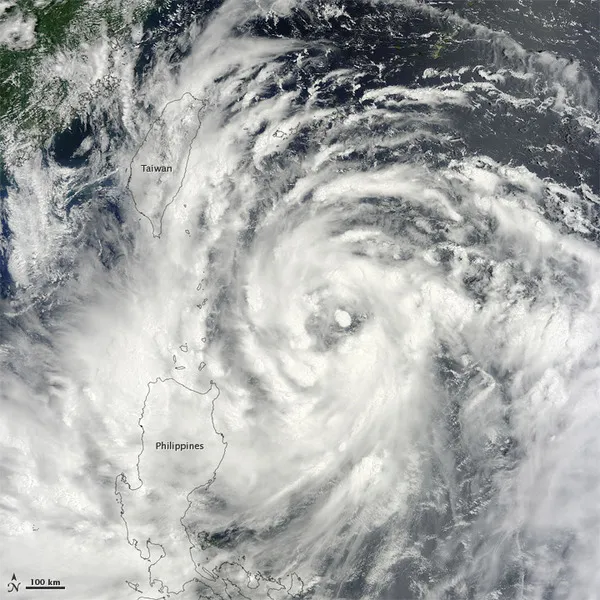
Typhoon Saola Forms, Heads for Taiwan, China
Get the world’s most fascinating discoveries delivered straight to your inbox.
You are now subscribed
Your newsletter sign-up was successful
Want to add more newsletters?
Delivered Daily
Daily Newsletter
Sign up for the latest discoveries, groundbreaking research and fascinating breakthroughs that impact you and the wider world direct to your inbox.
Once a week
Life's Little Mysteries
Feed your curiosity with an exclusive mystery every week, solved with science and delivered direct to your inbox before it's seen anywhere else.
Once a week
How It Works
Sign up to our free science & technology newsletter for your weekly fix of fascinating articles, quick quizzes, amazing images, and more
Delivered daily
Space.com Newsletter
Breaking space news, the latest updates on rocket launches, skywatching events and more!
Once a month
Watch This Space
Sign up to our monthly entertainment newsletter to keep up with all our coverage of the latest sci-fi and space movies, tv shows, games and books.
Once a week
Night Sky This Week
Discover this week's must-see night sky events, moon phases, and stunning astrophotos. Sign up for our skywatching newsletter and explore the universe with us!
Join the club
Get full access to premium articles, exclusive features and a growing list of member rewards.
The Atlantic and East Pacific basins have been quiet when it comes to storms over the past week, but the western Pacific Ocean has seen more action.
NASA's Terra satellite snapped this image of Typhoon Saola near Taiwan and the Philippines today (July 30).
Saola first formed as a tropical depression on July 28 and had strengthened into a typhoon (the same phenomenon as a hurricane) by today. The U.S. Navy's Joint Typhoon Warning Center (JTWC) reported that the storm had maximum sustained winds of 75 mph (120 kph) with gusts up to 92 mph (150 kph).
The JTWC has forecasted that Saola could pack sustained winds of 120 mph (194 kph) — the equivalent of a Category 3 hurricane in the Atlantic — within the next 48 hours. The forecasted path has the storm moving to the northwest, past Taiwan and towards southeast China.
The storm has already caused flooding and power losses in the Philippines, according to news reports.
This story was provided by OurAmazingPlanet, a sister site to LiveScience.
Get the world’s most fascinating discoveries delivered straight to your inbox.