Just like a Facebook account can say a lot about a person, birds' social networks can provide important information about their lives, offering scientists insights into how they find mates, or how information or disease spreads within a population.
However, wild animals social circles aren’t easily cracked.
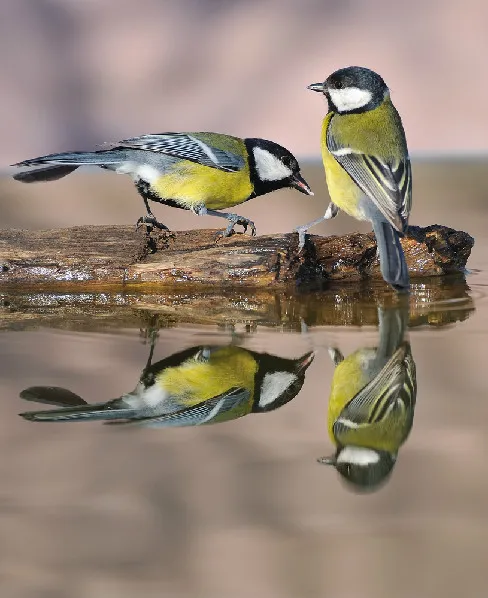
Researchers studying wild great tits, distinctively colored black-headed birds living Wytham Woods near Oxford, England, attached transponders to thousands of birds and recorded their presence when they showed up at 67 feeder locations throughout the woods during the winter.
Latest Videos From
This technique allowed researchers to collect about 1 million individual observations over two years. The problem: How to sort through all of this bird location data to get to the big picture, namely, the relationships among the birds.
The team, led by Ioannis Psorakis of Oxford University's Department of Engineering Science, was particularly interested in using this tracking data to study mated pairs.
To get a handle on the data, the researchers used a new approach to automatically identify periods of intense social activity within the observations. For the 2007-08 winter, researchers identified 37,681 gathering events at the bird feeders, and for the 2008-09 season, 31,466 gathering events.
"Our main hypothesis is that birds not only visit the feeder as part of such small flocks but also have a preference to the members of the flock they choose to forage with," the researchers write online Wednesday (June 13) in the journal Royal Society Interface.
So the researchers homed in on these periods of intense activity to see which birds participated and then drew links between individual birds based on whether or not they showed up at the events.
"If you think of the data about you in Facebook it records things like who you are friends with, where you've been, and what you share with others," Psorakis said in a statement. "What we have shown is that we can analyze data about individual animals, in this case great tits, to construct a 'Facebook for animals' revealing who affiliates with who, who are members of the same group, and which birds are regularly going to the same gatherings or 'events.'" [10 Golden Rules of Facebook]
While long-time pairs that had been together in previous seasons showed similar patterns of participating in the same communities throughout the season, members of new pairs interacted randomly at first, but gradually flocked together more and more during the early winter.
Follow Wynne Parry on Twitter @Wynne_Parry or LiveScience @livescience . We're also on Facebook & Google+.