













The Science of Rip Currents (Infographic)

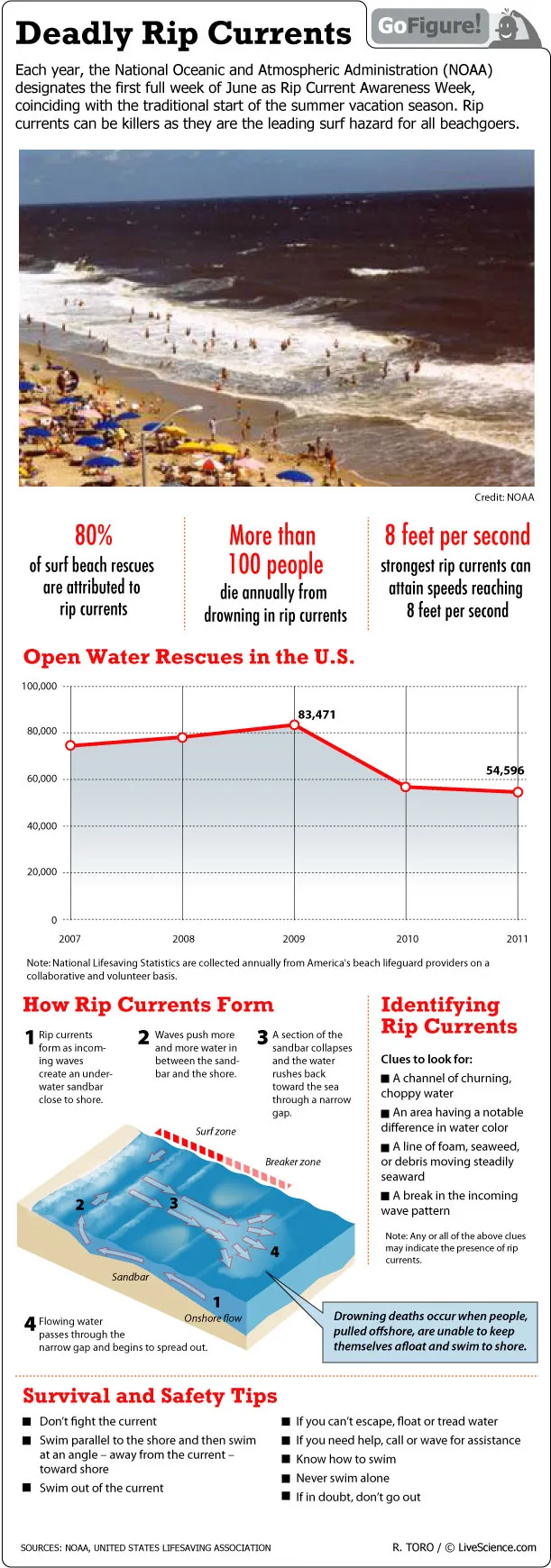
In an effort to heighten public awareness of rip currents at surf beaches, each year, the National Oceanic and Atmospheric Administration designates the first full week of June as Rip Current Awareness Week, coinciding with the traditional start of the summer vacation season. Rip currents are powerful, narrow channels of fast-moving water, often forming at low spots or breaks in sandbars. They are prevalent along the east, Gulf and west coasts of the U.S., as well as along the shores of the Great Lakes. Moving at speeds of up to 8 feet per second, rip currents can move faster than an Olympic swimmer. According to the United States Lifesaving Association, lifeguards rescue tens of thousands of people from rip currents in the U.S. every year and 80 percent of surf beach rescues are attributed to rip currents. It is estimated that 100 people are killed by rip currents annually. Panicked swimmers often try to counter a rip current by swimming straight back to shore—against the strong current. This puts them at risk of drowning due to fatigue. The safest way to escape from a rip current is to swim parallel to the shore and swim back to land at an angle.
- In Photos: Best US Beaches
- Stunning Sands Gallery: A Rainbow of Beaches
- The World's Biggest Oceans and Seas
Get the world’s most fascinating discoveries delivered straight to your inbox.
