













Giant Insects Shrunk As Birds Entered Prehistoric Skies

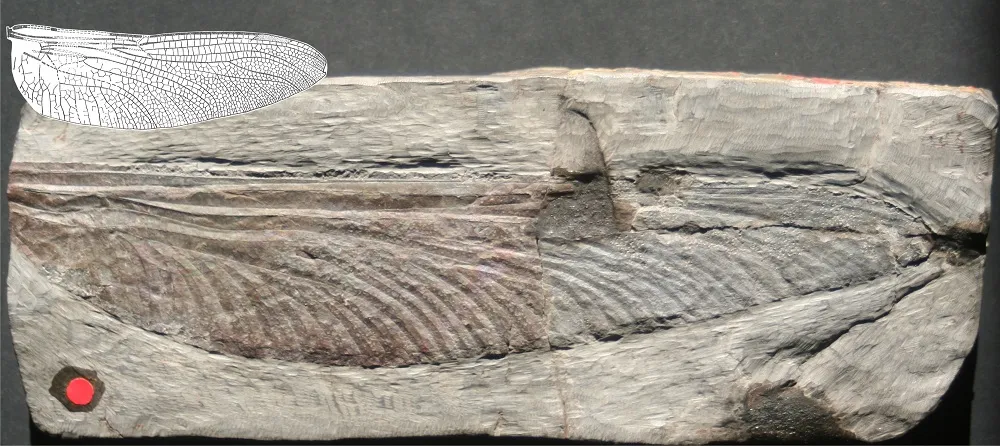
Millions of years ago, oversized insects like griffinflies boasting wingspans comparable to today's hawks scuttled across (and fluttered above) the planet. But why these jumbo jets of the insect world shrunk to modern size has remained a mystery, until now.
Turns out, as dinosaurs evolved flight and eventually took to the skies as birds, they beat down the huge insects already living there, effectively putting a cap on insect size through predation and competition in the prehistoric skies, as birds developed into sophisticated flying machines.
"The change in insect size is gradual," study researcher Matthew Clapham, of the University of California, at Santa Cruz, told LiveScience. "This gradual change fits quite nicely with the gradual evolution in birds at the time."
Insects during the Permian era (about 290 million to 250 million years ago) were huge compared with their counterparts today, boasting wingspans up to 30 inches (70 centimeters) across. The high levels of oxygen in the prehistoric atmosphere helped fuel their growth.
For comparison, the biggest modern winged insect is a dragonfly from the tropics, which has a wingspan of about 8 inches (20 centimeters) across. [Dazzling Photos of Dew-Covered Insects]
To figure out why modern insects are no longer so big, the researchers compiled a database of wingspan measurements of 10,500 fossilized insects from the last 320 million years of insect evolution. The authors found that during the first 150 million years of insect evolution, the wingspans on these insects mirrored levels of atmospheric oxygen; the more oxygen in the atmosphere, the larger the insects the environment could support.
These flying insects need lots of oxygen to support their flight muscles, Clapham said, and since their breathing tubes are inefficient, they need high atmospheric oxygen levels to grow large. The more oxygen in the environment, the more muscle mass the insect can provide oxygen for and the larger the insect can be.
Get the world’s most fascinating discoveries delivered straight to your inbox.
Around 140 million years ago, though, things changed. Insect wingspan stopped depending on oxygen levels and started dropping.
The researchers noticed that this change happened around the same time that birds first took to the skies. About 150 million years ago, the "first bird" Archaeopetryx appeared, and about 25 million years later, the lineage had diversified greatly.
Over time, the birds developed physical features that enabled quick flying and better maneuvering. As a result, they started eating the large insects, and competing with them for food sources.
"These large insects are predatory, and they eat smaller insects. It's possible that birds may have also eaten small insects, as many modern birds do," Clapham said. "If they are competing for the same resourse, birds may have been better competitors for these food sources."
A second slump in insect size happened about 60 million years ago, which the researchers think could be related to the evolution of bats, further increases in birds' aerial abilities, or to the mass extinction event that killed the dinosaurs.
The study is detailed today, June 4, in the journal Proceedings of the National Academy of Sciences.
You can follow LiveScience staff writer Jennifer Welsh on Twitter, on Google+ or on Facebook. Follow LiveScience for the latest in science news and discoveries on Twitter and on Facebook.

Jennifer Welsh is a Connecticut-based science writer and editor and a regular contributor to Live Science. She also has several years of bench work in cancer research and anti-viral drug discovery under her belt. She has previously written for Science News, VerywellHealth, The Scientist, Discover Magazine, WIRED Science, and Business Insider.