













Golden Gate Bridge Celebrates 75-year History (Infographic)

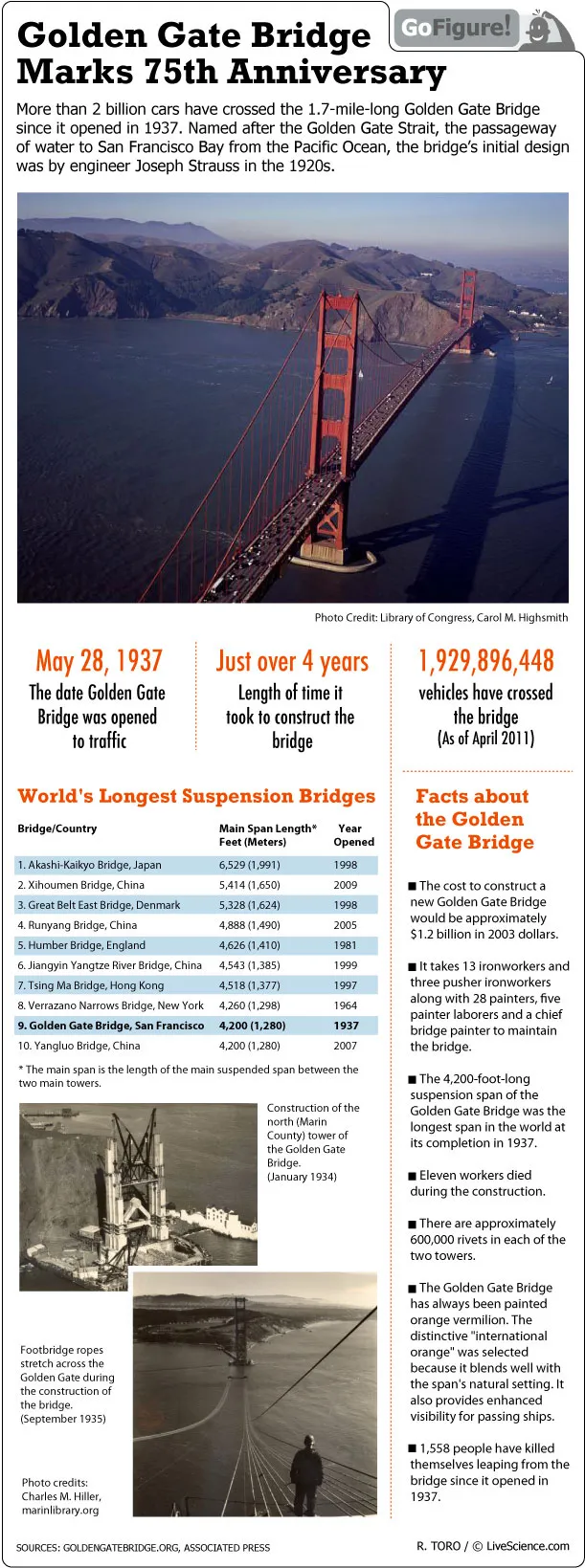
More than 2 billion cars have crossed the 1.7-mile-long Golden Gate Bridge since it opened in 1937. Named after the Golden Gate Strait, the passageway of water that connectsSan Francisco Bay to the Pacific Ocean, the bridge’s initial design was submitted by engineer Joseph Strauss in the 1920s. Strauss' first design called for a hybrid cantilever-suspension bridge. The idea for a full-suspension span — the design that was ultimately built — came later.
At its completion, the Golden Gate Bridge would become the world's longest suspension span, a masterpiece of engineering considering that the designers had to calculate all the potential forces on the bridge without the help of computers.
The bridge’s engineers used a modified version of the suspension bridge plan, enabling it to support the heavy load of vehicle traffic. It had to be light enough to be supported from its own cables, but still strong enough to withstand the strait's fierce winds and any earthquakes.
The bridge was still vulnerable to high winds, however, and had to be closed briefly in a 1951 windstorm that buckled the roadway.
Since then, stiffening trusses and lateral bracing made the bridge more stable and less susceptible to wind and potentially catastrophic twisting motions.
The bridge, like all infrastructure, has a life span. But with proper maintenance and upgrades in structural components, engineers hope to lengthen the life of the bridge another 150 years.
Get the world’s most fascinating discoveries delivered straight to your inbox.
