













Pinch and Draw with New Motion Control System

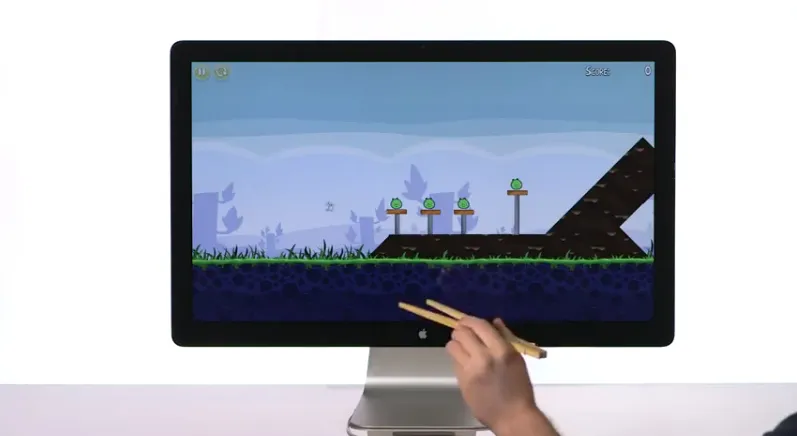
A San Francisco startup is working on a plug-and-play device that would let people pinch, draw and mold on their computers with hand and finger gestures. The system, called Leap, will have a precision of one-hundredth of a millimeter – about 100 times finer than any other gesture-recognizing system available now, the company claims – so it can distinguish between individual fingers. Leap will only cost $70, according to the company's site, which is half of the $150 retail price for Microsoft's motion control Kinect system.
Leap users should be able to plug a flash drive-size USB device into their Mac or PC computers. The device's sensors will create a 3-D space in front of it where it'll detect people's hands and fingers. How big the space will be seems to be under development still: The company's website says eight cubic feet, while a company press release says four cubic feet. Networking several Leap devices together will create a larger interaction space, according to the company site.
A video from Leap's makers shows the system's users writing in the air with their fingers and with pencils. They scroll and pinch like they would on a touch device and play video games ranging from Fruit Ninja to first-person shooters. People could use Leap to sign online documents, draw in 2-D and 3-D programs and manipulate models in 3D programs, the company said in a statement. In the future, developers could use Leap technology to make programs that let surgeons flip through charts on a computer without taking off their gloves, or allow engineers to mold virtual clay by patting the air like they would real clay.
The company is taking pre-orders, as well as applications for development kits from people who want to program for Leap. Leap's makers expect to start shipping their device in the winter.
This story was provided by InnovationNewsDaily, a sister site to Live Science. Follow InnovationNewsDaily on Twitter @News_Innovation, or on Facebook.
Get the world’s most fascinating discoveries delivered straight to your inbox.
