













Selfish Kids? Immature Brain Gets the Blame
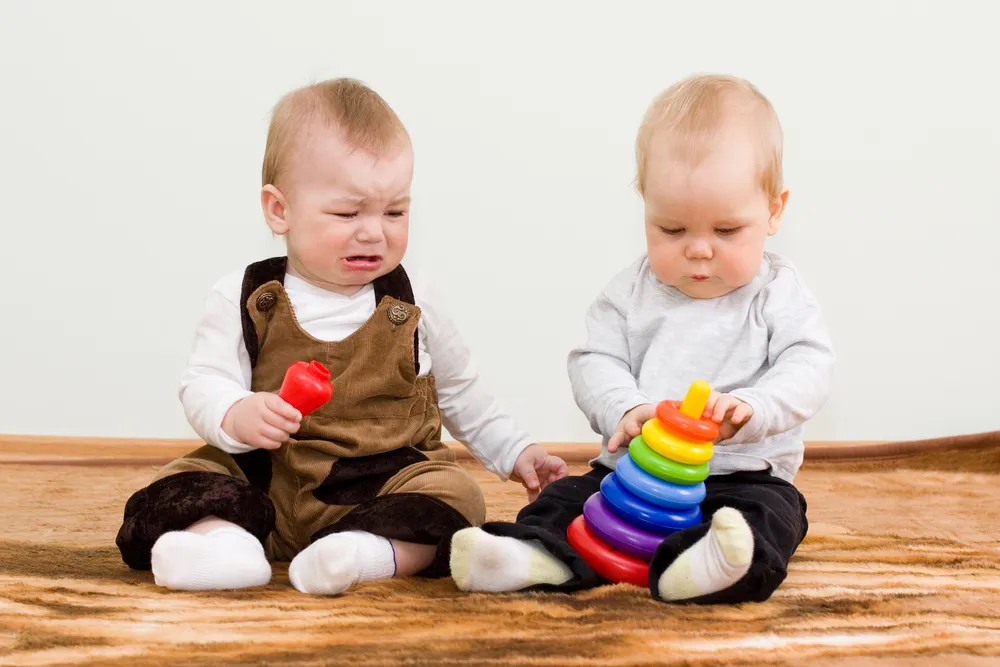
The next time your little angel yells, "Mine!" or refuses to share, it might help to know that the reason young children behave selfishly could be that a region of their brains remains immature, a new study suggests.
Researchers studied the behavior and brain scan images of children as they played games that involved sharing a reward with another child.
They found that even though young children understood how sharing benefited the other child, they were unable to resist the temptation to make the "selfish" decision to keep much of the reward for themselves. Brain scans revealed a region that matures along with children's greater ability to make less selfish decisions.
The findings will help researchers better understand how social behavior develops, said study author Nikolaus Steinbeis, a researcher at the Max-Planck Institute for Cognitive and Brain Sciences in Germany.
The study is published in tomorrow's (March 8) issue of the journal Neuron.
Bargaining behavior improves with age
Experts believe that as children grow older, they become less selfish and increasingly focus on how their behavior may affect or benefit others. But it remains unclear why and how this shift toward "strategic social behavior" happens.
Get the world’s most fascinating discoveries delivered straight to your inbox.
In the study, 146 children participated in two games, played in pairs. In the “Dictator Game,” one child offered to share a reward, and another child could only accept what was offered.
In the “Ultimatum Game,” one child could propose sharing the reward, but the other child could accept or reject the offer. If the child rejected the offer, neither child received a reward.
The findings showed that older children were better at sharing and negotiating with others. The researchers said these abilities grew as children improved control over their impulses.
A maturing brain
In the brain scan study, only children who made offers to share during both games were selected. To test whether the same brain regions involved in the children's behavior continued to play a role in adulthood, researchers looked at 14 adults who also participated in both games.
When comparing children and adults, the brain scans showed that a region called dorsolateral prefrontal cortex, located in the left side of the brain, toward the front, was more developed in adults. The area is considered to be involved with impulse control.
Researchers also noticed that younger children were more willing to accept unfair offers than older children.
The results suggest that selfish behavior in children may not be due to their inability to know "fair" from "unfair," but rather an immature part of the brain that doesn’t support selfless behavior when tempted to act selfishly.
Pass it on: Immature brains may be one reason why young kids act selfishly.
This story was provided by MyHealthNewsDaily, a sister site to LiveScience. Follow MyHealthNewsDaily on Twitter @MyHealth_MHND. Find us on Facebook.