













Lung Cancer Deaths Unchanged by Annual Chest X-Rays
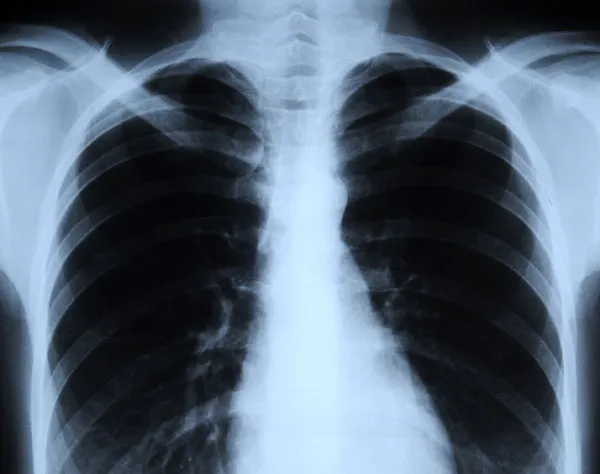
Patients at high risk for lung cancer who are screened annually with chest X-rays are no less likely to die from the disease, a large trial has found.
The new results come following a separate study that found screening patients instead with computed tomography (CT) scans does decrease the lung cancer death rate. Together, the findings suggest that X-ray screening for lung cancer should be abandoned in favor of CT scanning, researchers say.
X-ray screening is less expensive, and has a lower rate of false positives (findings that seem to indicate cancer, but later turn out not to be) than CT scans. But previous studies of X-ray screening, done in the 1970s and 1980s, found no benefit to chest X-rays in terms of reducing lung cancer deaths.
Still, those studies were smaller and harder to draw conclusions from. The new study included 155,000 patients and followed them for up to 13 years.
"We've now got a bigger study, much more well-designed, with much longer follow-up," said Philip Prorok of the National Cancer Institute, an author of the new study. "And still, the effect of X-ray screening is null."
The results were presented today (Oct. 26) at the annual meeting of the American College of Chest Physicians, in Honolulu, Hawaii, and published online in the Journal of the American Medical Association.
Before CT scans
Get the world’s most fascinating discoveries delivered straight to your inbox.
The new study was conceived in 1988, Prorok said, before CT scans were used as a screening tool. The idea was to put together a large enough trial that clinicians could detect even a small change in the death rate from annual chest X-rays.
Previous studies "were all very small, and if there was a small positive effect of screening with X-rays, the studies wouldn't have detected it," Prorok said.
Between 1993 and 2001, men and women at high risk of lung cancer between the ages of 55 and 74 were recruited at 10 locations around the country. Half were assigned normal courses of care, which involves no screening test for lung cancer, and the other half were offered annual chest X-rays for four years. All patients were then followed for the remainder of the study period, or up to 13 years.
The results revealed no significant difference in mortality between the two groups. During the follow-up period, 1,213 people who received X-rays, and 1,230 people who didn't, died of lung cancer.
The final results of a separate study — the National Lung Screening Trial (NLST) — showed that high-risk patients who received CT scans had a 20 percent decrease in lung cancer deaths, compared with patients who received X-rays. The findings were published Aug. 4 in the New England Journal of Medicine.
Toward annual screening
The new study complements the findings of the NLST, said Dr. Harold Sox, of Dartmouth Medical School, who wrote editorials accompanying both studies in the journal.
"Now you have one study that compared CT scans with chest X-rays, and another study that compared chest X-rays with nothing," Sox said. "So now we're in a position to make a pretty good guess about the potential impact of CT scans compared with doing nothing, which is the current standard practice."
The conclusion that X-rays provide no benefit in lung cancer mortality over no screening puts the final nail in the coffin for X-ray screening, Sox said. And the next questions are whether and how CT scanning should be implemented.
"Where we go to now is a serious consideration of whether to screen people at high risk of lung cancer using low-dose CT," Sox said. "People will have to wrestle with the question of should we do this or not."
In the NLST, 96 percent of positive screening test results turned out to be false alarms, and false alarms can bring unnecessary further testing, such as biopsies.
Further studies, he said, will have to analyze different frequencies of scanning, which patient populations are most helped out, and whether there is a cost benefit.
"The takeaway message from our study is that screening for lung cancer using chest X-rays is not an effective tool," Porok said. "People who are at high risk for lung cancer and want to get screened should talk to their physicians, and consider CT scans."
Pass it on: Annual chest X-rays are not an effective way to screen for lung cancer. CT scans, however, show promise.
This story was provided by MyHealthNewsDaily, a sister site to LiveScience. Follow MyHealthNewsDaily on Twitter @MyHealth_MHND. Find us on Facebook.