What the Heck Is This?
Get the world’s most fascinating discoveries delivered straight to your inbox.
You are now subscribed
Your newsletter sign-up was successful
Want to add more newsletters?
Delivered Daily
Daily Newsletter
Sign up for the latest discoveries, groundbreaking research and fascinating breakthroughs that impact you and the wider world direct to your inbox.
Once a week
Life's Little Mysteries
Feed your curiosity with an exclusive mystery every week, solved with science and delivered direct to your inbox before it's seen anywhere else.
Once a week
How It Works
Sign up to our free science & technology newsletter for your weekly fix of fascinating articles, quick quizzes, amazing images, and more
Delivered daily
Space.com Newsletter
Breaking space news, the latest updates on rocket launches, skywatching events and more!
Once a month
Watch This Space
Sign up to our monthly entertainment newsletter to keep up with all our coverage of the latest sci-fi and space movies, tv shows, games and books.
Once a week
Night Sky This Week
Discover this week's must-see night sky events, moon phases, and stunning astrophotos. Sign up for our skywatching newsletter and explore the universe with us!
Join the club
Get full access to premium articles, exclusive features and a growing list of member rewards.
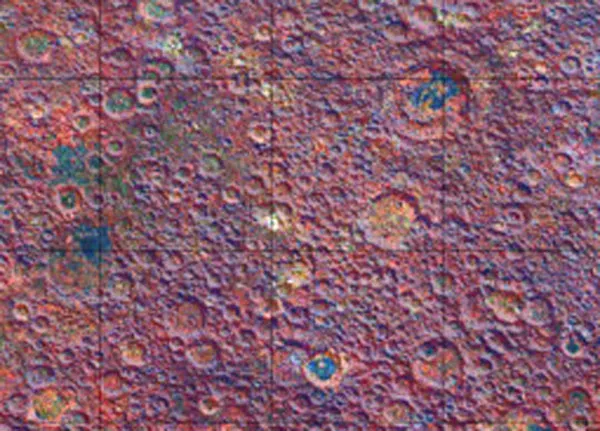
This image should be somewhat familiar to most of you. But the color might throw you off.
See if you can guess what it is before reading on.
Two hints if you're struggling: This thing will be the subject of intense global scrutiny tonight. And there is no cheese involved.
The image is a map of the moon, colorized to show slopes and craters on the surface. The "laser map" was released last week.
A cool moon fact: Because the moon has no atmosphere, its surface is a record of impact craters going back billions of years — they simple don't erode, so you can see newer craters inside older ones. If Earth had no air, it might look a lot like the moon.
Now, on to today's point:
A total lunar eclipse will occur tonight (June 15). It will be visible from the eastern half of Africa, the Middle East, central Asia and western Australia. It will not be visible from North America. Europe will see only parts of the show.
Get the world’s most fascinating discoveries delivered straight to your inbox.
Got a strange or interesting photo related to science, nature or technology? What the Heck, send it to me, and maybe I'll use it. Or follow me on Twitter, or Facebook.
Robert is an independent health and science journalist and writer based in Phoenix, Arizona. He is a former editor-in-chief of Live Science with over 20 years of experience as a reporter and editor. He has worked on websites such as Space.com and Tom's Guide, and is a contributor on Medium, covering how we age and how to optimize the mind and body through time. He has a journalism degree from Humboldt State University in California.