













The Dish: Helper Brain Cells Grown in Lab

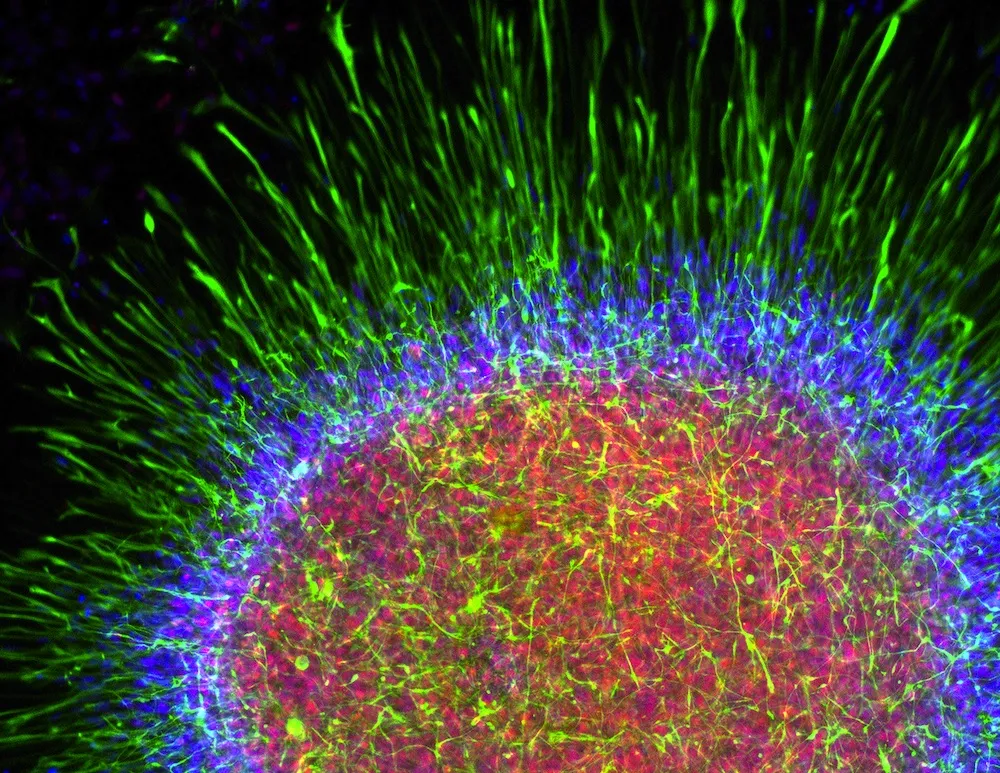
The most common brain cell, called the astrocyte, is often overlooked in the face of its cousin, the neuron. Researchers are finally realizing their importance and have, for the first time, been able to grow them in the lab.
"Not a lot of attention has been paid to these cells because human astrocytes have been hard to get," study researcher Su-Chun Zhang, at the University of Wisconsin-Madison. "But we can make billions or trillions of them from a single stem cell."
Astrocytes are small, star-shaped cells in the brain that act like the neuron's bodyguards, and because of that they play an important role in diseases of the central nervous system, including dementia. They are more common than neurons but have been hard to grow in the lab. Being able to study them could help researchers understand their role in normal brain functioning, and help find new treatments for disease. [10 Things You Didn't Know About the Brain]
"Without the astrocyte, neurons can't function," Zhang said in a statement. "Astrocytes wrap around nerve cells to protect them and keep them healthy. They participate in virtually every function or disorder of the brain."
They protect neurons by performing basic housekeeping functions, like regulating blood flow, cleaning up excess neurotransmitters (the communication molecules used by neurons), and playing a key role in controlling the blood-brain barrier, which keeps toxic substances out of the brain.
Zhang created the cells from both embryonic and adult stem cells by treating them with special proteins to get them to grow into astrocytes. These cells could also be useful as a transplant, to treat diseases like Lou Gehrig's disease (also called amyotrophic lateral sclerosis), in which the neurons are overworked. Transplanting healthy astrocytes could rescue the injured neurons.
The study was published Sunday (May 22) in the journal Nature Biotechnology.
Get the world’s most fascinating discoveries delivered straight to your inbox.
You can follow LiveScience staff writer Jennifer Welsh on Twitter @microbelover. Follow LiveScience for the latest in science news and discoveries on Twitter @livescience and on Facebook.

Jennifer Welsh is a Connecticut-based science writer and editor and a regular contributor to Live Science. She also has several years of bench work in cancer research and anti-viral drug discovery under her belt. She has previously written for Science News, VerywellHealth, The Scientist, Discover Magazine, WIRED Science, and Business Insider.