













Humans Make Gorillas Sick

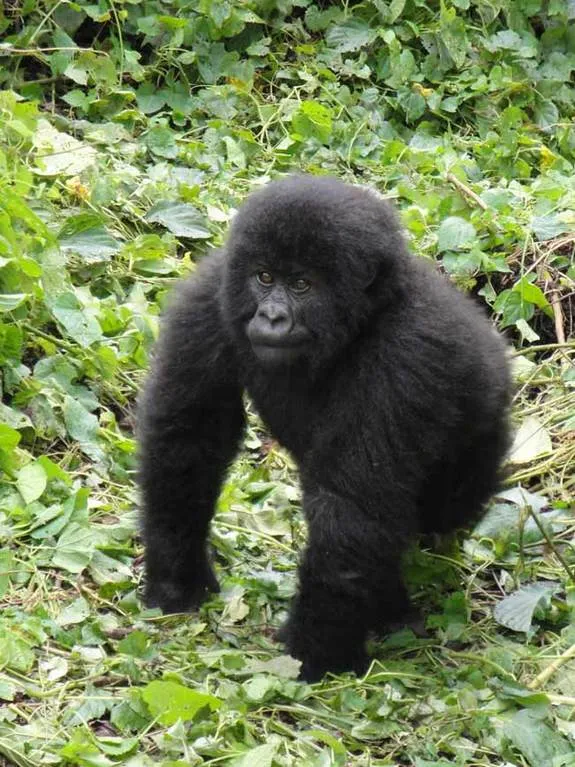
Humans may have spread a respiratory infection to a group of rare mountain gorillas, causing an outbreak that killed at least one of the animals, researchers report.
The world's population of mountain gorillas, about 786 of them, live in parks in Rwanda, Uganda and Democratic Republic of Congo, where they have become popular attractions for tourists. The ecotourism industry built up around them generates revenue to sustain the species and raises awareness of the animals' precarious status, according to a group of researchers led by Gustavo Palacios of Columbia University in New York.
"Tourism, however, also poses a risk for disease transmission from humans to gorillas," they write in the April issue of the journal Emerging Infectious Diseases.
While chimpanzees are our closest living relative, humans are also closely related to gorillas. Mountain gorillas, a subspecies of Eastern Gorilla, are vulnerable to human disease. Respiratory infections are particularly hazardous, and cause one-fifth of all sudden deaths among mountain gorillas, they write.
Despite attempts to prevent transmission, including restrictions on tourism and mandates that visitors wear masks, the frequency and severity of outbreaks has increased in recent years.
Between June 28 and Aug. 6, 2009, an outbreak in Rwanda sickened 11 of the 12 gorillas in one group. While some were given the antibiotic ceftriaxone, two untreated animals — an adult female and a male infant — died. The female gorilla was first observed coughing and lethargic on June 30. On July 4, she was found dead. The baby gorilla was born to a sick mother on July 20 and died three days later.
When their bodies were examined, traces of the human metapneumovirus were found in their tissues. Among humans, this virus can cause severe respiratory infections and it has infected and killed chimpanzees.
Get the world’s most fascinating discoveries delivered straight to your inbox.
While the female gorilla appeared to have been killed by a secondary, bacterial infection enabled by the virus, the infant's death appears directly related to starvation and an umbilical infection that had spread to his kidney, according to the researchers. The source of the virus remains unknown.
You can follow LiveScience writer Wynne Parry on Twitter @Wynne_Parry.
