













Diarrhea Hits the Road

The construction of highways in northern Ecuador did more than open up access to once-isolated villages. It also created a new network for diarrheal pathogens to travel on, highlighting how human-influenced habitat changes could impact public health, a new study concludes.
In 1996, the government of Ecuador started building roads to link the southern Columbian border with the Ecuadorian coast. The roads—officially opened in 2002—connected villages that previously used only rivers for transport.
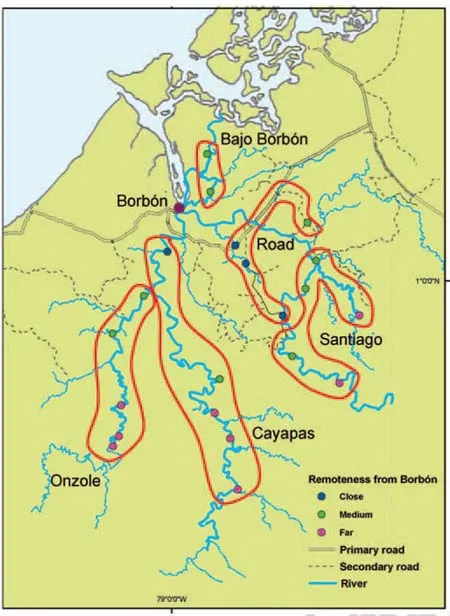
In 2003, a team of researchers began examining the effect of the new concrete landscape on 21 villages connected to the new transportation network. In particular, they examined the infection rates and modes of travel for three pathogens that cause diarrheal diseases: E. coli bacteria, rotavirus, and the protozoan parasite Giardia.
The researchers classified the villages with respect to their proximity to Borbon, a major population center of the region that lies on the road. The communities were classified as close, medium, and far [map].
"Of the 21 communities selected, we made sure we had broad representation of communities with respect to remoteness to Borbon," said Joseph Eisenberg, an epidemiologist from the University of Michigan's School of Public Health.
Villages farthest from to the road had infection rates that were up to eight times lower than communities closest to the road.
New roads allow villagers to travel more easily between different communities. This also means that pathogens can more easily catch a ride with the more mobile people, increasing infection rates.
Get the world’s most fascinating discoveries delivered straight to your inbox.
New travel networks also means that healthcare workers can get to the villages with more ease, but the increased risks outweighed the benefits.
"The increased diversity and potency of the microbe population apparently offsets the improved health care that also comes with new roads," Eisenberg said. "When you're thinking about a road, you have to also think about these impacts that will take years to unfold."
The study is detailed in this week’s Proceedings of the National Academy of Sciences.
- Top 10 Mysterious Diseases
- Dust Storms May Start Epidemics
- Virtual Pandemic: 90 Days to Infect Entire U.S.
- The Dirty Truth about Washing Your Hands
- All About Bacteria
