













Earthquake Forecasts Possible with Seconds to Spare

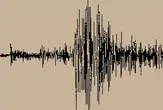
Italian scientists say the effects of strong earthquakes can be predicted seconds before the destruction occurs.
| Damage in Waves |
| • Primary waves, or P waves, come first. They move like a pressure wave, typically creating a jolt. P waves are the least destructive. |
The research confirms a similar study announced by California researchers a year ago.
Researchers in Italy analyzed seismic signals from more than 200 moderate to strong earthquakes in the Mediterranean region, ranging from magnitude 4.0 to 7.4. They found that the initial waves, called primary or P waves, indicate what's to come from secondary or S waves.
Primary waves travel at about 4 miles per second, covering about 40 miles in 10 seconds. Secondary waves, which are typically more damaging, move at about 2.2 miles per second.
The conclusion: Residents of a city located 40 miles from an epicenter would have about 15 seconds to prepare for impact if a sufficient automated warning system were established, the scientists say.
School children have long been advised to dive under their desks when an earthquake strikes. People at home are told to move to a strong doorway or get under a heavy desk to protect themselves. Seconds can make all the difference. In the California study last year, seismologist Richard Allen suggested cell phone towers might be used to automatically transmit warnings.
The new study, led by Aldo Zollo and Maria Lancieri of the University of Naples and Stefan Nielsen of the National Institute of Geophysics and Vulcanology in Rome, will be published this month in the journal Geophysical Research Letters.
Get the world’s most fascinating discoveries delivered straight to your inbox.
Among the potential beneficiaries, they say: Hospitals, fire departments and tsunami warning centers, all of which might be cut off from communications by the damage caused shortly after a warning is issued.
In developing countries, where moderate temblors can cause great damage, warning systems would be relatively cheap to install, the scientists said.
- Images: Deadly Earthquakes
- Only in California: Daily Earthquake Forecasts
- New Earthquake Warnings: Enough Time to Dive Under a Desk
- New Method Promises Better Earthquake Prediction
- All About Earthquakes

Robert is an independent health and science journalist and writer based in Phoenix, Arizona. He is a former editor-in-chief of Live Science with over 20 years of experience as a reporter and editor. He has worked on websites such as Space.com and Tom's Guide, and is a contributor on Medium, covering how we age and how to optimize the mind and body through time. He has a journalism degree from Humboldt State University in California.