













Researchers Turn Worms into Their Puppets

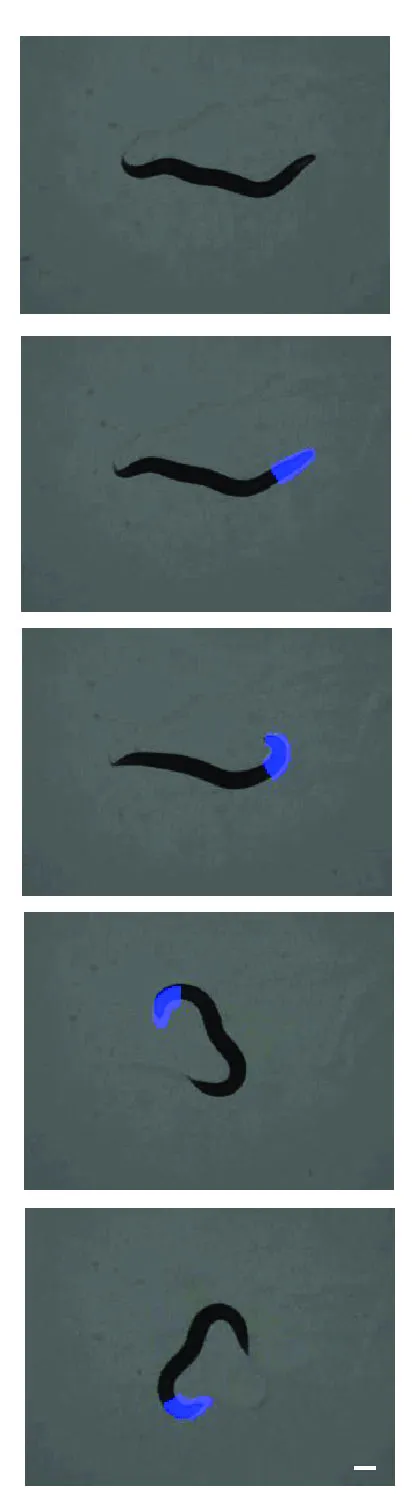
Like puppet masters, researchers have developed a technique to control the brain and muscles of tiny organisms, such as worms.
The method relies on an ordinary liquid crystal display (LCD) projector, which shines red, green and blue lights onto worms genetically engineered to have light-sensitive microbial proteins. The different color lights activate these proteins, allowing the scientists to switch neurons on and off like light bulbs and turn muscles on and off as well.
By connecting this illumination system to a microscope and combining it with video tracking, the researchers could track and record the behavior of worms and other freely moving animals, while maintaining the lighting on the intended spot on the animal. When the animal moves, changes to the light's location, intensity and color can be updated in less than 40 milliseconds.
The team tested the system on the worm Caenorhabditis elegans by exciting and inhibiting certain neurons.
In one experiment, they lit up the worm's head at regular intervals while the animal moved forward. This produced a coiling effect in the head, causing the worm to crawl in a triangular pattern. In another experiment, the team scanned light along the bodies of worms from head to tail, resulting in backward movement when neurons near the head were stimulated and forward movement when worm neurons near the tail were activated.
The research, which was detailed Jan. 9 in the advance online edition of the journal Nature Methods, allows unparalleled control over brain circuits in lab animals, which could provide detailed information about how certain neurons and circuits control various functions.
Hang Lu of Georgia Institute of Technology and graduate students developed the tool with support from the National Institutes of Health and the Alfred P. Sloan Foundation.
Get the world’s most fascinating discoveries delivered straight to your inbox.
- 10 Things You Didn't Know About the Brain
- 'Worm Therapy' Stimulates Gut Mucus
- 7 Ways the Mind and Body Chnage With Age
You can follow LiveScience Managing Editor Jeanna Bryner on Twitter @jeannabryner.
