













Designer Bacteria Can Heal Cracks in Concrete Buildings

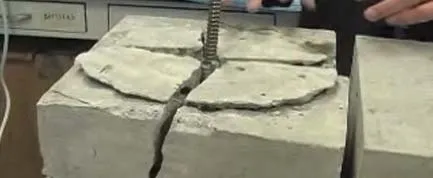
Researchers have designed bacteria that can produce a special glue to knit together cracks in concrete structures.
The genetically modified microbe has been programmed to swim down fine cracks in concrete and once at the bottom it produces a mixture of calcium carbonate and a bacterial glue. This glue combines with the filamentous bacterial cells, ultimately hardening to the same strength as the surrounding concrete and essentially "knitting" the building back together.
The bacterium tweaked by the researchers is called Bacillus subtilis and is commonly found in soil. Accordingly, the research team calls its building-healing agent "BacillaFilla."
The agent was developed with the goal in mind of prolonging the life of structures that are environmentally costly to construct.
"Around five per cent of all man-made carbon dioxide emissions are from the production of concrete, making it a significant contributor to global warming," said joint project instructor Jennifer Hallinan, a research fellow in complex systems at the University of Newcastle in the United Kingdom. "Finding a way of prolonging the lifespan of existing structures means we could reduce this environmental impact and work towards a more sustainable solution."
Hallinan continued: "This could be particularly useful in earthquake zones where hundreds of buildings have to be flattened because there is currently no easy way of repairing the cracks and making them structurally sound."
As part of the research, Newcastle students have not only considered the advantages of their engineered bacteria, but also the potential risks to the environment.
Get the world’s most fascinating discoveries delivered straight to your inbox.
The BacillaFilla spores start germinating only when they make contact with concrete – triggered by the very specific pH of the material – and they have a built-in self-destruct gene that prevents them from proliferating away from the concrete target.
Once the cells have germinated, they swarm down the fine cracks in the concrete and are able to sense when they reach the bottom because of the clumping of the bacteria, or so-called quorum sensing.
This clumping activates the concrete repair process and the cells differentiate into three types: cells which produce calcium carbonate crystals, cells which become filamentous – acting as reinforcing fibers – and thirdly cells that produce a glue that acts as a binding agent and fills the gap.
• 'Crack-Proof' Concrete Could Lead to Longer-Lasting Roads • Plastic Doesn’t Grow on Trees, But it Grows in Grass Now• 7 iPhone Apps that Help Save the Planet
