













Mysterious 'Monster' Washes Up on Canadian Shore

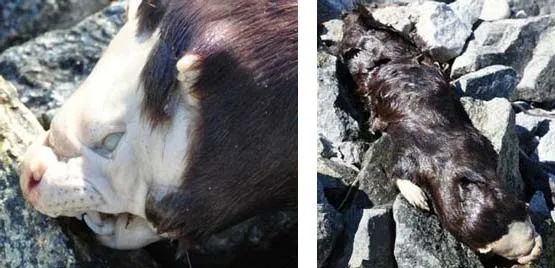
Earlier this month two nurses in the town of Kitchenuhmaykoosib in northern Ontario, Canada, found a bizarre creature on a lakeshore while walking with their dog Sam. Sam sniffed at something dark and furry that was lying face down in the water, and promptly pulled out a strange beast unlike anything the pair had ever seen.
It was a smallish creature about a foot long (it's not clear if that includes the tail), and didn't look unusual — except for the monster's ghostly, hairless white face and creepy fangs. The nurses took a few photos of the smelly thing and left it there. It was little more than a regional curiosity until photos of it recently appeared on the Web.
Speculation ran rampant: Some said it resembled an otter, or a boar, or weasel. Some suggested it might be another Montauk Monster — one of the dead, decaying raccoons that washed up on American beaches in 2008 and 2009. Others were convinced it was a baby lake monster or el chupacabra, the Hispanic vampire beast.
Some immediately assumed that it was linked to mysterious creatures mentioned by First Nations (North American Indian) myths and legends. For example, according to news reports some of the First Nations groups believe it is a rare beast known as an omajinaakoos, meaning "The Ugly One" — and which is a bad omen. The monster's discovery has some on edge, wondering if its discovery is a sign of some terrible tragedy to come.
It remained a puzzle for weeks. The first positive identification of the mystery monster came from a researcher named Blake Smith, who on May 22 posted on the Web site AtlantaSkeptics.com a detailed analysis comparing the monster's size, skull and dental characteristics with animals known to exist in the area, including muskrats, otters and minks. The following day researcher Loren Coleman, on the popular monster-themed Web site Cryptomundo, posted an analysis that reached the same conclusion: The monster is an American Mink (Neovison vison).
The fact that it was found in a lake suggests that it is merely a decomposing ordinary lake animal. The reason the mink's appearance is so unusual is that the fur that usually surrounds its face had fallen off in the water, and the parts of the body that remained dry were much more intact. Since few people would recognize a white, bloated, hairless mink face, a mystery monster was created when speculation outpaced science.
Thus yet another monster turns out to be an ordinary creature — not a Montauk Monster, not a chupacabra, and not an Ugly One. Just a stinky mink.
Get the world’s most fascinating discoveries delivered straight to your inbox.
- Our 10 Favorite Monsters
- Monsters, Ghosts and Gods: Why We Believe
- Cryptozoology: The Creatures of Legend
Benjamin Radford is managing editor of the Skeptical Inquirer science magazine. His new book "Scientific Paranormal Investigation: How to Solve Unexplained Mysteries" and other books and projects can be found on his website. His Bad Science column appears regularly on LiveScience.
