













Chupacabra? Creationist Museum Displays Mystery Beast

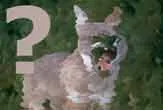
Last week a most unusual animal made its world premiere in an equally strange museum in the small town of Phoenix, New York.
The mounted and stuffed beast is claimed to be the elusive chupacabra (the vampiric "goat sucker" of Hispanic folklore), and is on display for an exclusive engagement through Halloween at the Lost World Museum, run by real estate agent John Adolfi.
Adolfi's chupacabra was found thousands of miles away in Blanco, Texas, in August. A local man presented the dead animal (half jokingly) as a chupacabra to a taxidermist named Jerry Ayer. It had been attacking chickens a few days earlier, and succumbed to poison left as bait. The canid creature weighed about 80 pounds and resembled a coyote or dog. But its front legs were a few inches longer than most coyotes', and it was mostly hairless except for around the feet and along its backbone.
The news got out, and soon the taxidermy school where Ayer works was getting 100 calls a day from people all over the world inquiring about his mysterious carcass. Ayer had planned to display the creature as a conversation piece, or in a museum, but soon realized that the publicity would not go away until he was rid of the chupacabra. It was soon sold to Mr. Adolfi, destined for a place in the spotlight at his museum.
So is the animal really the mysterious bloodsucking beast, the world's third best-known mystery animal after Bigfoot and the Loch Ness monster?
Tissue samples were taken, though DNA results have not been revealed.
The two most common explanations are that it is either a hairless Mexican dog breed called Xoloitzcuintli (Xolo for short), or a mangy coyote. Indeed, previous "chupacabras" found in nearby Cuero, Texas, in 2007 were found to be mostly coyote. Ayer himself is quick to point out that he never claimed he had a chupacabra.
Get the world’s most fascinating discoveries delivered straight to your inbox.
"I still don't know what it is; in my opinion it's some sort of genetically defective coyote," Ayer told LiveScience. "I don't believe in chupacabras. I don't believe in any mythical beasts whatsoever. We labeled it that because everyone else was calling it that."
Chupacabra or not, Adolfi wanted to exhibit the beast as an example of the fallibility of science. His Lost World Museum (named after Sir Arthur Conan Doyle's 1912 novel in which dinosaurs still exist) features items and artifacts that he believes proves that scientists don't have all the answers. A creationist, Adolfi believes that the Earth was created 6,000 to 10,000 years ago by God. He believes that by displaying the chupacabra, he will cast doubt on the credibility of mainstream scientists: If scientists scoff at the chupacabra's existence, could they be wrong about evolution and the age of the Earth?
It may be that the Lost World Museum holds the world's first stuffed and mounted authentic chupacabra. Or, once the DNA results come in, Adolfi may find that he has purchased and displayed the world's most expensive coyote carcass. Only time — and science — will tell.
- Our 10 Favorite Monsters
- Monsters, Ghosts and Gods: Why We Believe
- Cryptozoology: The Creatures of Legend
Benjamin Radford is managing editor of the Skeptical Inquirer science magazine and investigator with the Committee for Skeptical Inquiry. His book on the chupacabra mystery will be published next year. His books, films, and other projects can be found on his website. His Bad Science column appears regularly on LiveScience.
