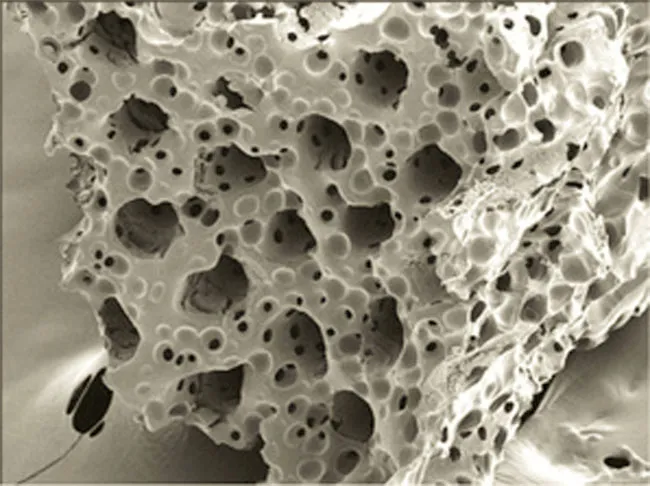
A new synthetic scaffold can nurture functional heart cells in a Petri dish and coax blood vessel growth in the hearts of live rats.
The heart scaffold, described this week in the journal Proceedings of the National Academy of Sciences, could one day be used to heal human hearts after a heart attack.
"Today, if you have a heart attack there's nothing that doctors can do to repair the damage," lead author Buddy Ratner, a University of Washington professor of bioengineering, said in a statement. However, he added, bioengineering offers some hope for boosting the heart's healing powers.
Latest Videos From
"What if we can deliver vital new cells in that damaged portion of the heart?" Ratner said.
Growing hearts
To find out, the researchers developed a flexible, gel-like material shaped into flexible rods filled with pores narrower than a human hair. The goal, they said, is to create a scaffold-like matrix, much like the frame of a house, that can be injected into a damaged human heart and seeded with stem cells from the patient or donor. The scaffold would give the cells something to grow on, gradually dissolving as it is replaced by living tissue.
The idea of using scaffolds to build organ tissue is not new, but the researchers say their material is cheaper and simpler than other cardiac scaffolds in development.
The researchers tested their scaffold first with embryonic chicken cells, and then with cardiac muscle cells derived from human embryonic stem cells. In the lab, the human muscle cells multiplied quickly in the scaffold environment, the researchers reported. The cells could survive up to 300 micrometers (the diameter of 4 human hairs) deep into the matrix. They also began to contract with enough force to bend the scaffold.
The researchers then injected the 4-millimeter-long scaffolds into the heart of a live rat. After four weeks, the animal's body had accepted the material, and blood vessels were penetrating the scaffold.
Heart's life line
The new scaffold isn't yet ready for human testing, but the researchers are optimistic about its efficacy. Their findings suggest that the scaffold helps trigger blood vessel growth, perhaps because immune cells called macrophages enter the pores and release chemical signals to elicit the formation of new vessels. That's important for the survival of new cells, said study co-author Chuck Murry, a professor of pathology and bioengineering at the University of Washington.
"The first thing that transplanted heart cells have to do is survive. And when you transition them from a culture dish to the body, initially they don't have a blood supply. So we have to promote the host blood supply as fast as possible," Murry said. "We're very optimistic that this scaffold will help keep the muscle cells alive after implantation and will help transition them to working heart muscles."
The researchers are now investigating the reasons behind the accelerated blood vessel growth. They're also working to tweak the time it takes the scaffold to dissolve to better match the time it takes new cells to grow. Meanwhile, the study authors have co-founded a startup company, Beat BioTherapeutics, to license the technology and move toward human testing.
- First Image of a Bleeding Heart
- Top 10 Amazing Facts About Your Heart
- 7 Foods Your Heart Will Hate

 Live Science Plus