













'Pokémon Go' Catches High Praise from Health Experts

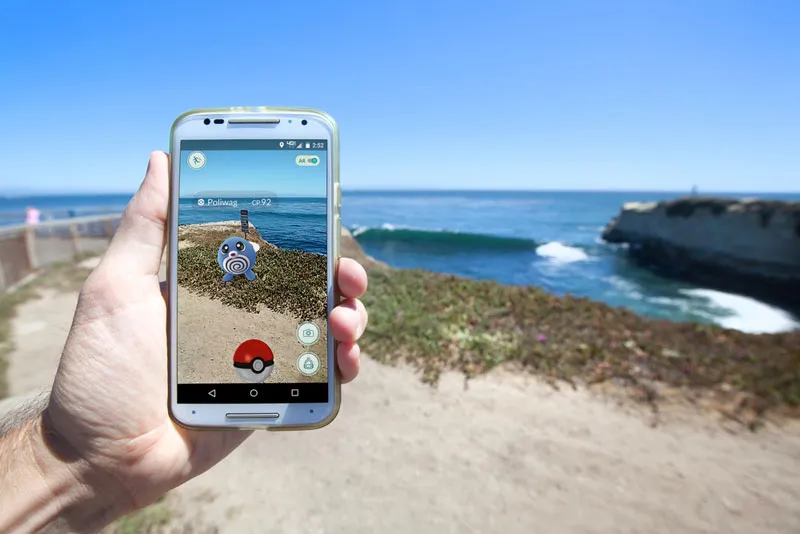
Whether it's lumbering up a giant hill to catch up with Pikachu, or trekking several blocks just to nab Magnemite, "Pokeman Go" players are getting some exercise.
Indeed, the wildly popular new mobile game "Pokémon Go" is having an unintended side effect for some users: It's making them more physically active. And experts say this is an encouraging trend in a type of technology that has historically kept people confined to their chairs.
"For a long time, the advances in technology have promoted reduced physical activity and increased time in sedentary behavior, which comes with well-known health risk," said Graham Thomas, an assistant professor of psychiatry and human behavior at the Miriam Hospital's Weight Control and Diabetes Research Center in Providence, Rhode Island. "It's nice to see technology changing and being used in a way that promotes physical activity," Thomas told Live Science.
In the game, which launched in North America on July 6, users walk around (in the real world) and try to find and capture (virtual) Pokémon characters. The app uses your device's camera, so that when you look at your phone, you see a Pokémon character superimposed over a real-world object, a feature known as augmented reality. Different types of Pokémon appear in different locations, so players need to explore the world around them to catch different characters.
Now, many "Pokémon Go" players are walking miles and miles each day to play the game, boosting their overall physical activity. One user tweeted, "Thanks to #PokemonGO I walked 5 miles [8 kilometers] and made eight new friends yesterday. This is the most active and social I have been in months." Another tweeted, "Knowing I've actually walked at least 8 miles [13 km] within the past week is great considering I never leave the house."
Experts in sports medicine and obesity prevention welcomed the news.
"Anything that gets people up off their couch … and out in the real world moving around I think is a wonderful thing," said Dr. Michael Jonesco, a sports medicine physician at The Ohio State University Wexner Medical Center. [4 Easy Ways to Get More Exercise]
Get the world’s most fascinating discoveries delivered straight to your inbox.
So-called "exergames," or video games that involve exercise, are not new. One of the best examples of an exergame system, the Nintendo Wii Fit, was released in 2007. But "Pokémon Go" is more likely to result in a higher degree of activity than many previous exergames, Thomas said. That's because this game requires users to walk around, whereas many previous exergames could actually be played with very little activity, Thomas said.
And players might not even feel like they're exercising, in part because the game is providing them with novel goals — to catch Pokémon characters — rather than setting a specific amount of activity to work toward, said Dale Bond, an assistant professor of psychiatry and human behavior at Brown University in Rhode Island.
And although most players are engaging in fairly light activity during the game, it's still better than staying sedentary, he said. "The longer you're moving, the more calories you're going to burn, and the better it's going to be for your overall health," Bond said.
Still, there is a danger that some users might overdo it and exercise much more than they are used to, resulting in muscle soreness, stress fractures or neck strain from looking down at their phones too much, Jonesco said. It's important that people build up their activity slowly and listen to their body to avoid injury, he told Live Science.
The success of "Pokémon Go" may inspire even more games that get people active. "[This is] the first time that a game like this has really taken off to such an amazing degree," said Thomas, who also played the game on his lunch break. "It will probably serve to encourage other developers to make other games to require activity," he said.
In addition, the game allows users to meet other people in the real world, for example, at landmarks where there are many Pokémon. This could result in "new friendships that are built around being active," Thomas said.
Original article on Live Science.

Rachael is a Live Science contributor, and was a former channel editor and senior writer for Live Science between 2010 and 2022. She has a master's degree in journalism from New York University's Science, Health and Environmental Reporting Program. She also holds a B.S. in molecular biology and an M.S. in biology from the University of California, San Diego. Her work has appeared in Scienceline, The Washington Post and Scientific American.