













Dr. Oz's 'Magic Weight-Loss Cure' Loses Remaining Support

Green coffee bean extract, which Dr. Mehmet Oz promoted on his show as a "magic weight-loss cure," had one scientific study backing up the extract's purported effects. Now, that research has been retracted, the blog Retraction watch reported.
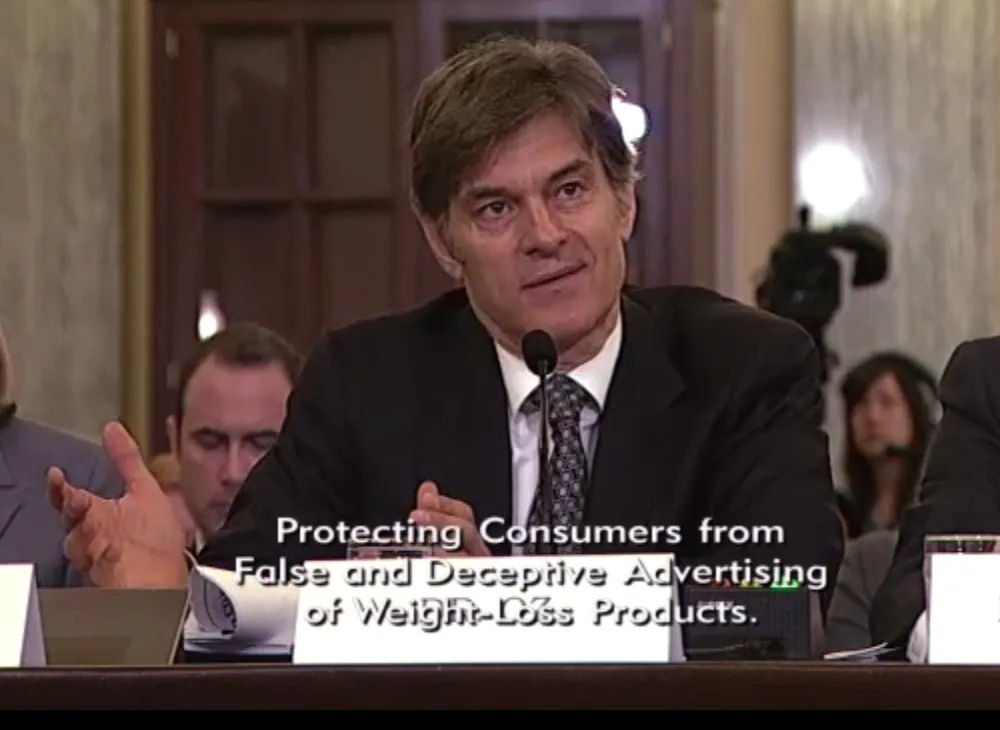
Oz had to do some explaining on Capitol Hill in June, when senators asked him why he, as a surgeon and well-known doctor, promotes the use of weight-loss products that are scientifically unfounded.
"I don't get why you need to say this stuff, because you know it's not true," Sen. Claire McCaskill, D-Mo., told Oz.
When asked specifically about the green coffee bean extract, Oz cited a study that found people who took the supplements did lose weight. However, that study was funded by the product's manufacturer, and the panel noted this when questioning Oz. [5 Dr. Oz's 'Miracle' Diet Pills]
Now, even that evidence is gone. Two authors of the study published a notice last week, announcing that they are retracting their study.
"The sponsors of the study cannot assure the validity of the data, so we, Joe Vinson and Bryan Burnham, are retracting the paper," the authors wrote.
The green coffee bean manufacturer, Applied Food Sciences Inc., agreed to pay a $3.5 million settlement after the Federal Trade Commission charged the company with using the results of the flawed study to make baseless claims, the agency announced in September.
Get the world’s most fascinating discoveries delivered straight to your inbox.
"The FTC complaint alleges the study was so hopelessly flawed that no reliable conclusions could be drawn from it," the agency said in a statement.
According to the FTC, the Texas-based company paid researchers in India to conduct a clinical trial on overweight people, to test whether their dietary supplement that contained green coffee extract actually held weight-loss benefits. However, the FTC charges that those researchers altered crucial data in the study, including participants' weights.
The agency also said that the company couldn't find a publisher for the study, so the company hired researchers Vinson and Burnham, of the University of Scranton in Pennsylvania, to rewrite the study and get it published, according to the FTC.
"Applied Food Sciences knew or should have known that this botched study didn't prove anything,” said Jessica Rich, director of the FTC's Bureau of Consumer Protection. "In publicizing the results, it helped fuel the green coffee phenomenon."
Oz popularized the results during a 2012 episode, saying, "You may think magic is make-believe, but this little bean has scientists saying they've found the magic weight-loss cure for every body type. It's green coffee extract."
Email Bahar Gholipour. Follow Live Science @livescience, Facebook & Google+. Originally published on Live Science.
