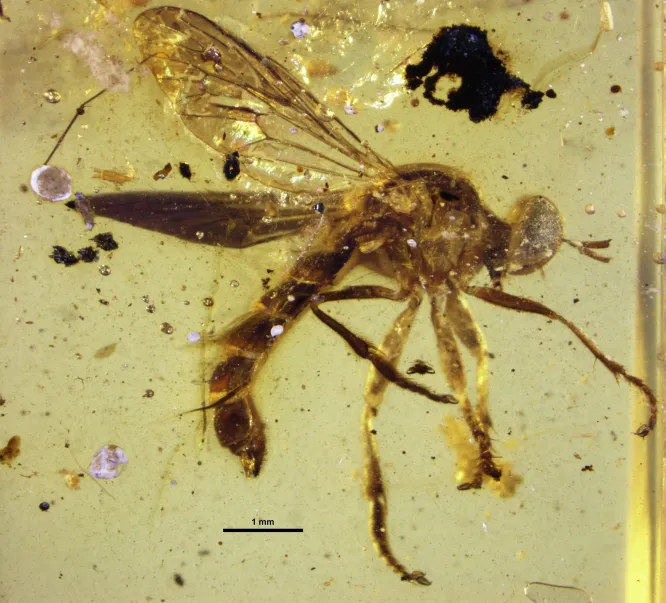
Photos: Ancient Assassin Flies Trapped in Amber
Get the world’s most fascinating discoveries delivered straight to your inbox.
You are now subscribed
Your newsletter sign-up was successful
Want to add more newsletters?
Delivered Daily
Daily Newsletter
Sign up for the latest discoveries, groundbreaking research and fascinating breakthroughs that impact you and the wider world direct to your inbox.
Once a week
Life's Little Mysteries
Feed your curiosity with an exclusive mystery every week, solved with science and delivered direct to your inbox before it's seen anywhere else.
Once a week
How It Works
Sign up to our free science & technology newsletter for your weekly fix of fascinating articles, quick quizzes, amazing images, and more
Delivered daily
Space.com Newsletter
Breaking space news, the latest updates on rocket launches, skywatching events and more!
Once a month
Watch This Space
Sign up to our monthly entertainment newsletter to keep up with all our coverage of the latest sci-fi and space movies, tv shows, games and books.
Once a week
Night Sky This Week
Discover this week's must-see night sky events, moon phases, and stunning astrophotos. Sign up for our skywatching newsletter and explore the universe with us!
Join the club
Get full access to premium articles, exclusive features and a growing list of member rewards.
Ancient Assassin Fly
A scientist at the Smithsonian National Museum of Natural History discovered and named a new 100-million-year-old species of assassin fly, Burmapogon bruckschi, after studying the first two specimens ever preserved in Burmese amber.
Face of Ancient Fly
Scientists examined a male and a female specimen using a microscope. They found several distinct features not seen in modern species of assassin flies, including long flattened antennae and a unique V-shaped eye structure.
Fierce Killers
Assassin flies are named for their fierce predation strategy; they ambush and catch their prey in flight, puncture their armor-like skeleton and inject them with digestive fluids before extracting the nutrients within.

Spiny Abs
The female B. bruckschi contained small spines on its abdomen, leading researchers to hypothesize that these insects are most closely related to other assassin fly species that use these spines to dig and deposit their eggs in sandy environments.
Assassin Fly Phylogeny
The newly identified ancient species joins more than 7,500 species of assassin flies that are alive today.
Get the world’s most fascinating discoveries delivered straight to your inbox.