 Live Science Plus





You are now subscribed
Your newsletter sign-up was successful
Want to add more newsletters?

Delivered Daily
Daily Newsletter
Sign up for the latest discoveries, groundbreaking research and fascinating breakthroughs that impact you and the wider world direct to your inbox.

Once a week
Life's Little Mysteries
Feed your curiosity with an exclusive mystery every week, solved with science and delivered direct to your inbox before it's seen anywhere else.

Once a week
How It Works
Sign up to our free science & technology newsletter for your weekly fix of fascinating articles, quick quizzes, amazing images, and more

Delivered daily
Space.com Newsletter
Breaking space news, the latest updates on rocket launches, skywatching events and more!

Once a month
Watch This Space
Sign up to our monthly entertainment newsletter to keep up with all our coverage of the latest sci-fi and space movies, tv shows, games and books.

Once a week
Night Sky This Week
Discover this week's must-see night sky events, moon phases, and stunning astrophotos. Sign up for our skywatching newsletter and explore the universe with us!
Join the club
Get full access to premium articles, exclusive features and a growing list of member rewards.
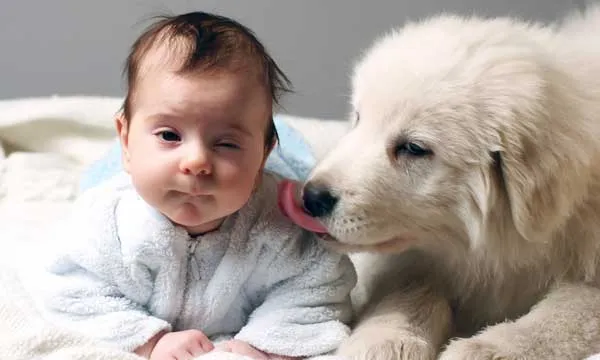
Exposure to "dog dust," or the dried flakes of skin that fall from Fido, may protect against developing allergies and asthma in later life by altering intestinal bacteria, a new study in mice suggests.
The dust appears to contain bacteria that, when present in an animal's gut, affects the production of immune cells in the animal's airway.
"Perhaps early life dog exposure introduces microbes into the home that somehow influence the gut microbiome, and change the immune response in the airways," said study researcher Susan Lynch, an associate professor of medicine at the University of California, San Francisco.
Past research has shown that exposure to pets, particularly dogs, during infancy may prevent people from developing allergies, and other work has found that bacteria in the gut can affect allergies and asthma. The new study adds to the research because it links these ideas — showing that the reason exposure to dog dust may prevent allergies is that the dust affects the population of gut microbes.
In the study, Lynch and her colleagues exposed mice to dust from a dog owner's home, and then tested the mice's immune response to cockroach allergens and ovalbumin (a component of egg whites), two substances that commonly trigger asthma attacks. They found that mice exposed to dog dust had fewer immune cells in the airway that respond to allergens, compared with mice not exposed to dog dust. [9 Weirdest Allergies]
The findings, detailed online today (Dec. 16) in the journal Proceedings of the National Academy of Sciences, hint at a mechanism for how dog exposure may protect against allergies or asthma.
"Early life exposure to dogs, and cats to a lesser extent, can protect against allergic sensitization, and this has been shown in epidemiological studies," Lynch told LiveScience, though she stopped short of recommending exposing infants to dogs.
Lynch added that the findings fit in well with the hygiene hypothesis, the theory that a lack of exposure to beneficial microbes is linked to the development of autoimmune diseases and asthma in western nations.
The researchers also found the gut microbial makeup of the two rodent groups differed: The mice exposed to dogs had more of the bacteria Lactobacillus johnsonii.
When the researchers forcefed L. johnsonii to the unexposed mice, they found the mice showed a reduced immune response in their airways to both allergens, though not as much as mice originally exposed to the dog dust.
The next step will be understanding exactly what these microbes are doing in the gut, and how they affect the immune response in the airway, Lynch said.
Ultimately, understanding this process could lead to the development of microbial-based therapies to treat or prevent asthma.
Editor's Note: This article was updated at 11:38 a.m. ET Dec. 19 to correct quotes by Susan Lynch. Lynch did not say early life exposure to dogs could protect against allergens, or that they found the L. johnsonii bacteria in dog dust.
Follow Tanya Lewis on Twitter and Google+. Follow us @livescience, Facebook & Google+. Original article on LiveScience.

