













Facts About Rare Earth Elements (Infographic)

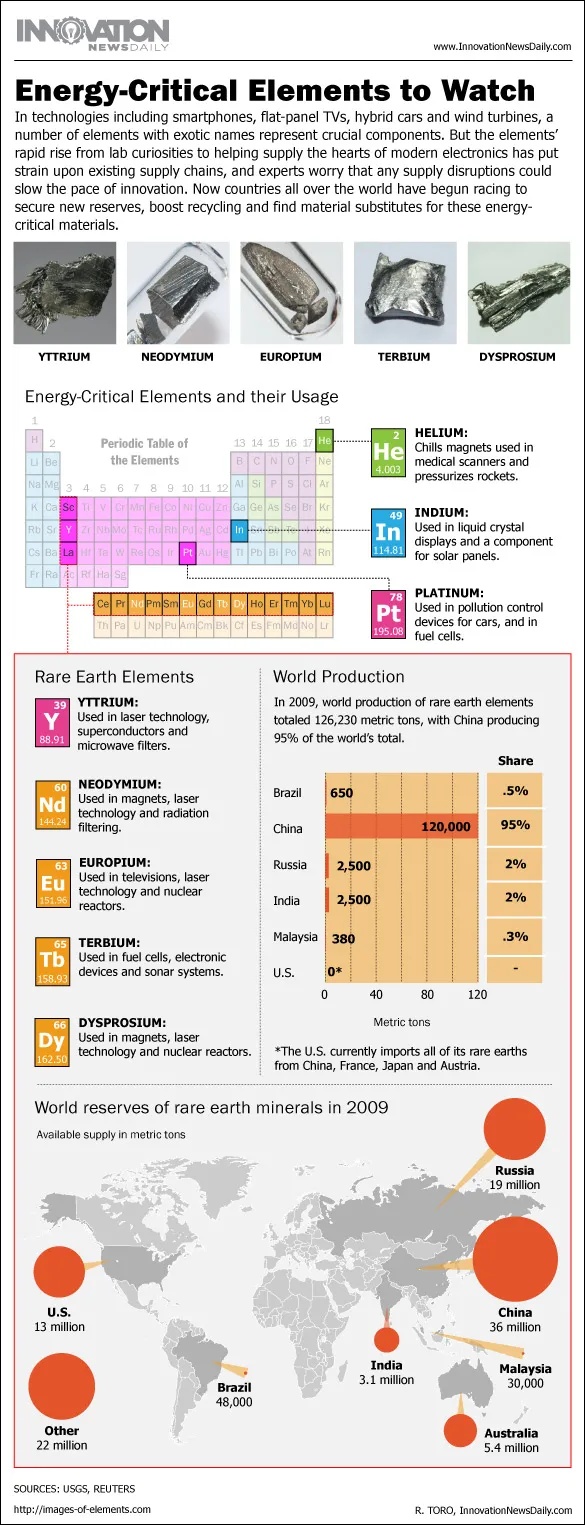
In technologies including smartphones, flat-panel TVs, hybrid cars and wind turbines, a number of elements with exotic names represent crucial components. But the elements’ rapid rise from lab curiosities to helping supply the hearts of modern electronics has put strain upon existing supply chains, and experts worry that any supply disruptions could slow the pace of innovation. Now countries all over the world have begun racing to secure new reserves, boost recycling and find material substitutes for these energy-critical materials.
Energy-Critical Elements and their Usage:
• Helium chills magnets used in medical scanners and pressurizes rockets.
• Indium is used in liquid crystal displays and a component for solar panels.
Get the world’s most fascinating discoveries delivered straight to your inbox.
• Platinum is used in pollution control devices for cars, and in fuel cells.
Rare Earth Elements:
• Yttrium is used in laser technology, superconductors and microwave filters.
• Neodymium is used in magnets, laser technology and radiation filtering.
• Europium is used in televisions, laser technology and nuclear reactors.
• Terbium is used in fuel cells, electronic devices and sonar systems.
Dysprosium is used in magnets, laser technology and nuclear reactors.
In 2009, world production of rare earth elements totaled 126,230 metric tons, with China producing 95% of the world’s total. The U.S. currently imports all of its rare earths from China, France, Japan and Austria.
