













Newfound Lichen Species Named for Obama

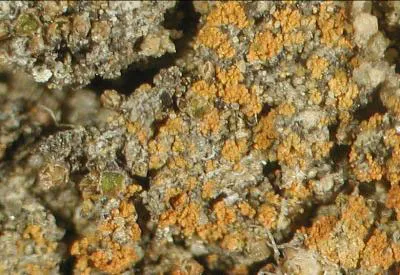
A newly discovered species of lichen — a plant-like growth that looks like moss or a dry leaf — has been named after President Obama.
Kerry Knudsen, lichen curator of the University of California, Riverside Herbarium, discovered the species in 2007 while doing a survey for lichen diversity on Santa Rosa Island in California.
"I named it Caloplaca obamae to show my appreciation for the president's support of science and science education," he said. "I made the final collections of C. obamae during the suspenseful final weeks of President Obama's campaign for the United States presidency."
C. obamae, the first species of any organism to be named in honor of President Obama, grows on soil and almost became extinct during the days of cattle ranching that spanned nearly 100 on Santa Rosa Island.
"This species barely survived the intensive grazing of cattle, elk and deer on Santa Rosa Island," Knudsen said. "But with cattle now removed, it has begun to recover. With future removal of elk and deer — both of which were introduced to the island — it is expected to fully recover."
Lichens, which grow slowly and live for many years, result from fungi and algae living together.
There are about 17,000 species of lichen worldwide, with some 1,500 species reported from California. More than 300 lichens have been reported from Santa Rosa Island, almost as many species of native plants on the island.
Get the world’s most fascinating discoveries delivered straight to your inbox.
"C. obamae teaches us that possibly other species of lichens and plants unique to Santa Rosa Island may have disappeared, without ever being known to science, since sheep ranching began there in the 1850s," Knudsen said.
Knudsen published his discovery in the March issue of the journal Opuscula Philolichenum.
- 10 Wild New Species
- Engineers Create 'Nanobamas'
- Top 10 Poisonous Plants
